5 Essential Reasons Every UK Business Needs a Fire Risk Assessment
By the AL23 Safety teamPublished 4 August 20265 min read
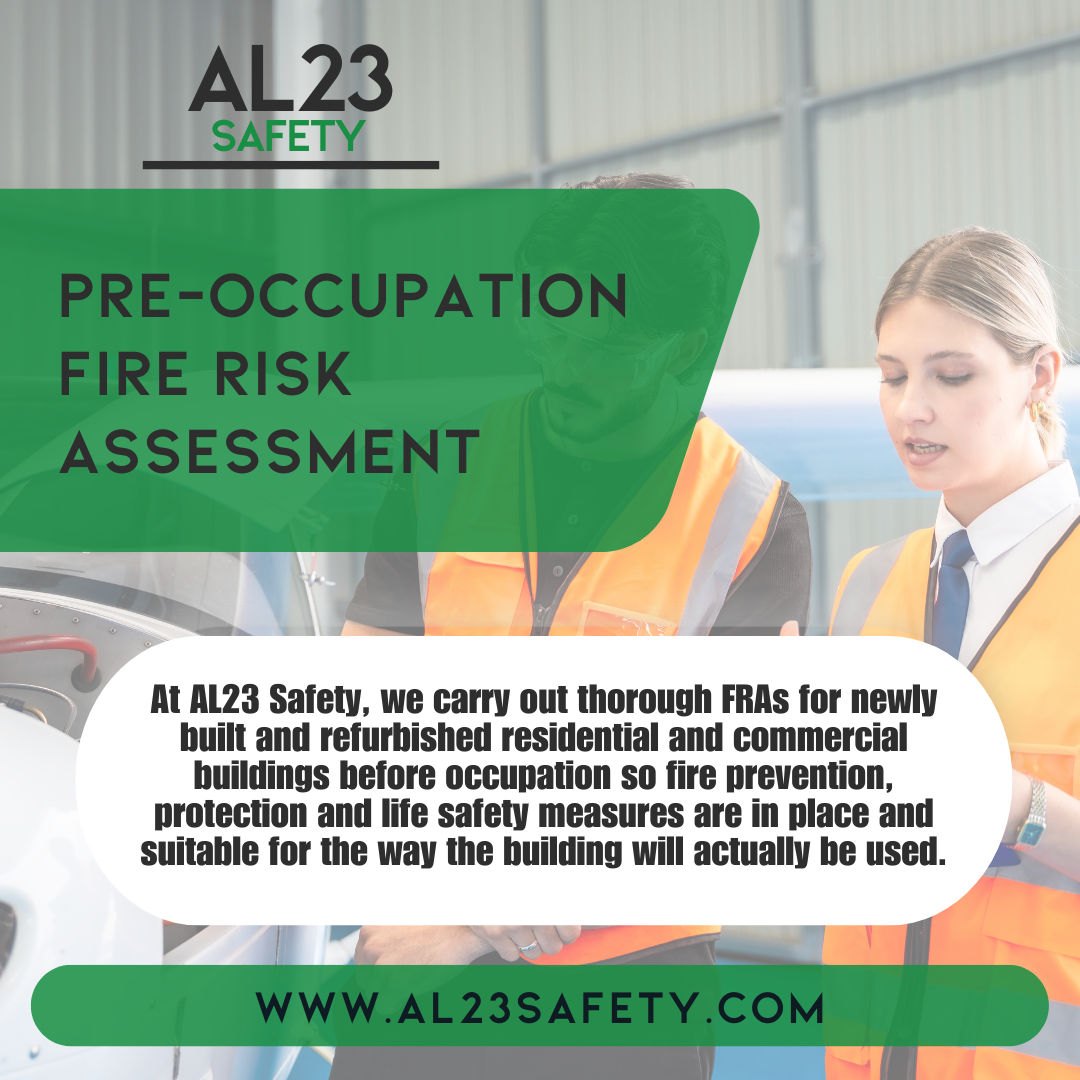
Fire risk assessment is a legal requirement and a fundamental safeguard for every UK business. Under the Regulatory Reform (Fire Safety) Order 2005, the Responsible Person must ensure a suitable and sufficient fire risk assessment is carried out and kept under review. Far from being a bureaucratic exercise, a high-quality fire risk assessment identifies real hazards, evaluates the risks to people and produces practical actions that prevent fire, protect lives and limit damage to property and business continuity.
At AL23 Safety we specialise in delivering thorough, BAFE SP205 certified fire risk assessments that meet regulatory expectations while remaining practical and proportionate to each premises. This guide explains why a professional fire risk assessment is essential, what it should include and how it supports both compliance and a stronger safety culture.
1. Legal Compliance is Non-Negotiable
The Fire Safety Order places a clear duty on the Responsible Person-usually the employer, owner or person in control of the premises-to carry out a fire risk assessment. Failure to do so or to act on significant findings, can result in enforcement notices, prohibition notices, prosecution and unlimited fines. In the most serious cases, individuals can face imprisonment.
A properly conducted fire risk assessment demonstrates due diligence. It provides documented evidence that hazards have been identified, risks evaluated and appropriate controls put in place. For multi-occupied buildings, shared responsibilities and the need for co-operation between duty holders make a clear, written assessment even more important. Regular review ensures the assessment remains valid as the premises, occupancy or processes change.
2. Protecting Lives is the Primary Purpose
Every year fires in commercial and industrial premises cause injuries, fatalities and lasting trauma. A fire risk assessment systematically examines how a fire could start, how it could spread and how people would escape. It considers the needs of all occupants, including those who may require assistance and evaluates the adequacy of detection, warning, escape routes, emergency lighting, signage and fire-fighting equipment.
By identifying weaknesses before an incident occurs, a fire risk assessment reduces the likelihood of fire and improves the chances of safe evacuation if one does break out. This protective purpose sits at the heart of the legislation and should remain the central focus of every assessment.
3. Safeguarding Business Continuity and Assets
Beyond the human cost, fire can destroy premises, stock, equipment, records and reputation. Even a relatively small fire can lead to prolonged downtime, lost customers and significant uninsured losses. A thorough fire risk assessment highlights opportunities to reduce both the chance of ignition and the potential for fire spread, thereby protecting the organisation’s ability to continue operating.
Insurers increasingly expect to see evidence of a current, competent fire risk assessment. Demonstrating that risks are being managed can support more favourable terms and shows stakeholders that the business takes its responsibilities seriously.
4. Creating a Prioritised, Actionable Improvement Plan
An effective fire risk assessment does more than list problems, it produces a clear, prioritised action plan. Significant findings are ranked according to risk so that the most serious issues are addressed first. Recommendations are practical, proportionate and assigned realistic timescales.
At AL23 Safety our assessments include a detailed examination of the premises-emergency exits, compartmentation, fire alarm and detection systems, emergency lighting, extinguishers, housekeeping, storage of flammable materials and management arrangements. The resulting action plan gives the Responsible Person a practical roadmap for improvement rather than a vague list of concerns.
5. Supporting a Positive Fire Safety Culture
When employees see that fire safety is taken seriously, that assessments lead to real improvements and that their concerns are heard, engagement increases. A fire risk assessment provides a structured opportunity to involve staff, raise awareness and reinforce good practices such as keeping escape routes clear, reporting faults promptly and participating in fire drills.
Ongoing support and periodic review keep fire safety visible and relevant. This continuous attention helps embed fire safety as part of everyday operations rather than an occasional compliance exercise.
What a Professional Fire Risk Assessment Should Cover
A suitable and sufficient fire risk assessment typically examines:
- Sources of ignition, fuel and oxygen
- People at risk, including vulnerable individuals and visitors
- Existing fire safety measures and their adequacy
- Means of detection, warning and escape
- Fire-fighting equipment and access for the fire and rescue service
- Management arrangements, training, drills and maintenance
- The need for further control measures
BAFE SP205 certification provides independent assurance that the assessment has been carried out by competent professionals working to recognised standards. This third-party validation gives additional confidence to duty holders, enforcing authorities and insurers.
Common Challenges and How to Overcome Them
Many businesses struggle with outdated assessments, generic templates that do not reflect actual conditions or action plans that are never implemented. Others find it difficult to keep assessments current when premises or processes change. Engaging competent external support addresses these issues by bringing fresh eyes, specialist knowledge and clear documentation that stands up to scrutiny.
Smaller organisations sometimes assume that fire risk assessment is only necessary for large or high-risk premises. The law applies to virtually all non-domestic premises and even low-risk environments require a suitable assessment.
How AL23 Safety Delivers Effective Fire Risk Assessments
AL23 Safety provides BAFE SP205 certified fire risk assessments tailored to the specific needs of each client. Our consultants conduct a detailed on-site analysis, identify hazards, evaluate risks to all occupants and produce a prioritised action plan that supports both legal compliance and practical improvement. We work with organisations of all sizes, from small businesses to large multi-site operations and offer ongoing support to keep fire safety measures effective and up to date.
Whether you need an initial assessment, a review of an existing document or help implementing recommendations, we focus on clear, usable advice that protects people and supports your business.
Taking the Next Step
A fire risk assessment is not optional and should never be treated as a once-only exercise. It is a living process that underpins legal compliance, protects lives, safeguards assets and contributes to a stronger safety culture. By choosing a competent, certified provider you gain both peace of mind and a practical plan for continuous improvement.
If your organisation needs a thorough, BAFE-certified fire risk assessment or support in maintaining effective fire safety arrangements, contact AL23 Safety today. We will help you meet your legal obligations while prioritising the safety of everyone who uses your premises.