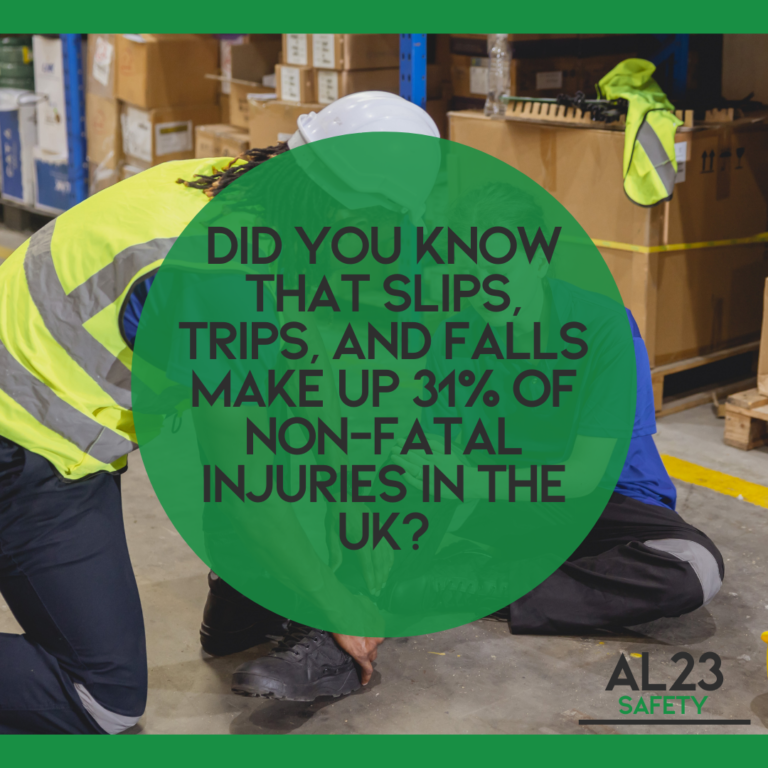
Preventing workplace falls starts with understanding the significant risk they pose to both employees and businesses. As alarming statistics reveal, falls contribute to over 31% of non-fatal workplace injuries across the UK, making them one of the most common yet preventable workplace hazards. For employers concerned about employee wellbeing and regulatory compliance, implementing effective fall prevention measures isn’t just good practice—it’s essential.
The Hidden Cost of Workplace Falls in the UK
Slips, trips, and falls might seem like minor incidents, but their impact can be devastating. Beyond the immediate physical injuries, workplace falls can lead to:
- Long-term employee disability
- Lost productivity and increased absenteeism
- Higher insurance premiums
- Potential legal liability and regulatory penalties
- Decreased workplace morale
With such serious consequences, preventing workplace falls should be a top priority for every business in the UK. Let’s explore seven powerful strategies to create a safer working environment.
1. Conduct Thorough Fall Risk Assessments
The foundation of effective workplace fall prevention begins with a comprehensive risk assessment. This isn’t merely a box-ticking exercise—it’s an opportunity to identify specific hazards unique to your workplace.
A proper fall risk assessment should:
- Identify all potential slip, trip, and fall hazards
- Evaluate the likelihood and potential severity of accidents
- Consider different work environments and activities
- Document findings systematically
- Develop tailored preventative measures
Remember that risk assessments aren’t one-time activities. They should be reviewed regularly and updated whenever workplace conditions change.
2. Implement Robust Housekeeping Protocols
Many workplace falls result from preventable housekeeping issues. Creating and enforcing clear protocols can dramatically reduce these incidents:
- Establish routine cleaning schedules, especially for high-traffic areas
- Address spills immediately with appropriate signage
- Maintain clear walking paths free from obstacles
- Manage cables and cords with proper containment systems
- Ensure adequate lighting throughout the workplace
Effective housekeeping isn’t just about cleanliness—it’s a fundamental workplace safety strategy.
3. Provide Comprehensive Employee Training
Even the best safety systems fail without proper employee engagement. Training is the bridge between safety policies and their practical implementation.
Effective workplace fall prevention training should:
- Occur regularly, not just during induction
- Include demonstrations of proper techniques and procedures
- Cover identification of potential hazards
- Outline reporting procedures for unsafe conditions
- Be tailored to specific job roles and environments
By investing in thorough training, employees become active participants in preventing workplace falls.
4. Establish Near-Miss Reporting Systems
Near-miss incidents provide valuable insights into potential hazards before injuries occur. Creating a robust reporting system allows for:
- Early identification of developing hazards
- Trend analysis to spot recurring issues
- Opportunities for preventative intervention
- Employee engagement in safety protocols
- Continuous improvement of safety measures
The most effective near-miss reporting systems are non-punitive, encouraging honest reporting without fear of repercussions.
5. Invest in Proper Equipment and Maintenance
Many falls occur due to equipment failures or inappropriate tools for the task. Ensuring proper equipment selection and maintenance is crucial for UK safety compliance:
- Provide appropriate ladders and platforms for working at height
- Ensure regular inspection and maintenance of all equipment
- Supply proper footwear with slip-resistant properties when necessary
- Install guardrails, handrails, and other protective barriers
- Use anti-slip floor treatments in high-risk areas
Remember that equipment investments ultimately cost less than the expenses associated with workplace accidents.
6. Create Clear Safety Signage and Communication
Visual cues serve as constant reminders of potential hazards and proper procedures:
- Place warning signs at all potential hazard areas
- Use colour-coding for different risk levels
- Ensure signage is visible, well-lit, and multilingual when appropriate
- Include both text and symbols for maximum comprehension
- Regularly update signage to reflect changing conditions
Effective communication extends beyond signage to include regular safety briefings and updates about new potential hazards.
7. Foster a Proactive Safety Culture
Perhaps the most powerful workplace safety strategy is creating a culture where safety becomes everyone’s responsibility:
- Involve employees in safety committee activities
- Recognise and reward safety-conscious behaviours
- Encourage open communication about safety concerns
- Lead by example with management following all safety protocols
- Integrate safety discussions into regular team meetings
When preventing falls becomes part of your organisational identity, compliance naturally follows.
Partner with AL23 Safety for Expert Guidance
Implementing these strategies can feel overwhelming, particularly for businesses without dedicated safety personnel. This is where partnering with UK safety compliance experts becomes invaluable.
AL23 Safety specialises in helping UK businesses develop comprehensive workplace fall prevention programmes. Our team of experts can:
- Conduct professional risk assessments tailored to your specific environment
- Develop customised training programmes for your workforce
- Create documentation that ensures regulatory compliance
- Provide ongoing support and guidance for continuous improvement
- Help establish effective reporting and monitoring systems
Conclusion: Beyond Compliance to Commitment
Preventing workplace falls isn’t just about meeting regulatory requirements—it’s about demonstrating a genuine commitment to employee wellbeing. When workers feel valued and protected, productivity increases, absenteeism decreases, and company morale improves.
The statistics on workplace falls in the UK are sobering, but they’re not inevitable. By implementing these seven powerful strategies and partnering with safety experts like AL23 Safety, your business can significantly reduce fall risks while creating a workplace culture built on safety, respect, and shared responsibility.
Contact AL23 Safety today to discuss how our tailored services can transform your approach to workplace fall prevention and ensure complete UK safety compliance.
![Creating a Safer Workplace: The Importance of Health and Fire Safety Services In today's business environment, prioritising health and fire safety is not just a regulatory obligation but a moral imperative. With the constant evolution of legislation and safety standards, businesses must stay informed and compliant to protect their employees and assets. At AL23 Safety, our comprehensive range of services supports you in developing a safer, more compliant, and productive workplace. Understanding the Legislative Landscape To create a robust health and safety culture, businesses must understand the intricate web of UK regulations that govern workplace safety. The Health and Safety at Work Act 1974, the Regulatory Reform (Fire Safety) Order 2005, and the Management of Health and Safety at Work Regulations 1999, among others, set the foundation for compliance. Our consultants at AL23 Safety leverage extensive knowledge of these laws to provide tailored strategies, ensuring you meet and exceed compliance expectations. Tailored Fire Risk Assessments One of our core offerings is detailed fire risk assessments. The Regulatory Reform (Fire Safety) Order mandates that businesses conduct thorough assessments to identify fire hazards, evaluate risks, and implement control measures. We employ a meticulous approach by analysing the specific needs of your establishment, ensuring that every potential risk is addressed effectively. Fire Strategy Development In conjunction with risk assessments, we develop bespoke fire strategies that align with your unique operational needs. This proactive planning not only helps in compliance but significantly reduces the likelihood of incidents, creating a safer environment for everyone. Our approach is data-driven, allowing us to implement strategies supported by best practice guidelines and industry standards. Ongoing Support and Training Safety doesn’t stop at implementation. AL23 Safety offers ongoing support and training to ensure your team is equipped to handle emergencies. Our training sessions cover essential areas, including fire safety protocols, evacuation procedures, and equipment handling. With 24/7 access to our consultancy services, you can navigate challenges with confidence, knowing that expert advice is just a call away. Empowering Your Business Through Safety At AL23 Safety, we are dedicated to empowering businesses by cultivating an environment of safety that nurtures productivity and innovation. Our hands-on consultants are not just experts; they are your partners in achieving a culture of excellence in health and safety. Partnering with us means choosing a future where safety is ingrained in every aspect of your operations. Let us help you navigate the complexities of health and fire safety. Discover our tailored services that can transform your workplace into a model of compliance and safety excellence. [Visit our services] for more information.](https://al23safety.com/wp-content/uploads/2026/04/CreatingaSaferWorkplaceTheEssentialRoleofHealthandFireSafetyServices.png)