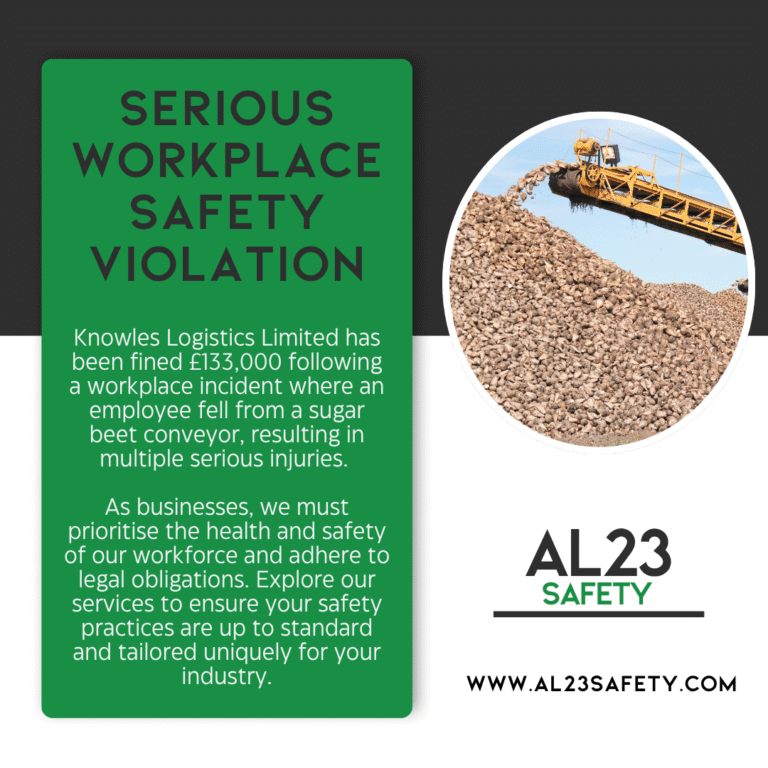
Preventing workplace accidents is a fundamental responsibility for every UK business. The recent case involving Knowles Logistics Limited highlights exactly why robust safety protocols must never be overlooked. Following a serious incident where an employee suffered life-threatening injuries, the company was fined £133,000, a clear warning of the financial and human costs when safety measures fall short.
What Happened at Knowles Logistics?
In 2024, an employee at Knowles Logistics fell from a sugar beet conveyor while attempting to clear a blockage. The worker was working at height without an adequate safe system of work in place. The Health and Safety Executive (HSE) investigation found that the company had failed to implement proper risk controls, leading to severe injuries and the substantial fine.
This incident underscores a recurring theme in HSE enforcement: falls from height remain one of the leading causes of workplace fatalities and serious injuries in the UK. Preventing workplace accidents in such high-risk environments demands far more than basic compliance, it requires proactive, thorough planning.
Why Comprehensive Risk Assessments Are Essential for Preventing Workplace Accidents
Effective workplace accident prevention begins with a detailed risk assessment. The HSE emphasises that employers must identify hazards, evaluate risks, and implement suitable control measures. In the Knowles case, the absence of a safe system for clearing blockages directly contributed to the accident.
A robust risk assessment should:
- Identify all potential hazards, including working at height
- Consider who might be harmed and how
- Evaluate existing controls and determine if they are sufficient
- Record findings and implement necessary improvements
- Review and update assessments regularly
By adopting this structured approach, businesses can significantly reduce the likelihood of incidents and demonstrate due diligence if ever investigated by the HSE.
The Critical Role of Safe Systems of Work
One of the most important elements in preventing workplace accidents is establishing clear, safe systems of work. These documented procedures outline exactly how tasks should be performed to minimise risk.
In logistics and warehousing environments, common high-risk activities include:
- Working on or near conveyors
- Clearing blockages
- Working at height
- Loading and unloading vehicles
For each of these, employers should develop specific methods that eliminate or control hazards. This might involve using dedicated tools to clear blockages from ground level, installing guard rails, or providing mobile elevated work platforms (MEWPs) instead of allowing workers to climb machinery.
Training and Competence: Building a Safety-First Culture
Even the best-written procedures are ineffective if employees aren’t properly trained. Preventing workplace accidents requires ongoing education that ensures every team member understands:
- The hazards associated with their tasks
- The correct safe systems of work
- How to use personal protective equipment (PPE)
- Emergency procedures
Regular toolbox talks, refresher training, and competency assessments help embed safety into daily operations. A strong safety culture where employees feel empowered to raise concerns, is proven to reduce incident rates dramatically.
The True Cost of Inadequate Safety Measures
The Knowles Logistics case demonstrates that the consequences of failing to prioritise workplace safety measures extend far beyond the immediate human suffering:
- £133,000 fine
- Legal costs
- Increased insurance premiums
- Reputational damage
- Potential improvement or prohibition notices from HSE
When weighed against the investment required for proper risk assessments, training, and equipment, the business case for proactive safety management is overwhelming.
How Professional Consultancy Supports Workplace Accident Prevention
Many businesses, particularly SMEs, lack in-house health and safety expertise. Partnering with experienced consultants provides access to:
- Tailored risk assessments
- Bespoke safe systems of work
- HSE-compliant documentation
- Practical training programmes
- Ongoing support and audit services
At AL23 Safety, we specialise in helping logistics, warehousing, and manufacturing businesses implement robust systems that not only meet legal requirements but exceed them. Our pragmatic approach has helped numerous clients avoid incidents, reduce insurance costs, and foster genuine safety cultures.
Taking Action Today
Preventing workplace accidents isn’t about ticking boxes, it’s about protecting people and securing your business future. The Knowles Logistics incident serves as a powerful reminder that cutting corners on safety is never worth the risk.
Start by reviewing your current risk assessments and safe systems of work, particularly for high-risk activities like working at height or machinery maintenance. If you’re unsure where to begin or want independent assurance that your arrangements are adequate, professional support can make all the difference.
Contact AL23 Safety today to discuss how we can help you build a safer, more resilient workplace. Your employees and your bottom line, will thank you for it.