Essential health and safety checks are a powerful way to begin the new year on the right foot. As businesses across the UK reset goals and priorities in January, taking time to review and refresh safety practices not only ensures compliance with legislation but also demonstrates genuine care for your team. A proactive approach can prevent incidents, boost morale, and protect your organisation from costly disruptions.
At AL23 Safety, we’ve supported hundreds of businesses in Manchester and beyond to strengthen their safety culture. Here are the seven essential health and safety checks every organisation should prioritise right now.
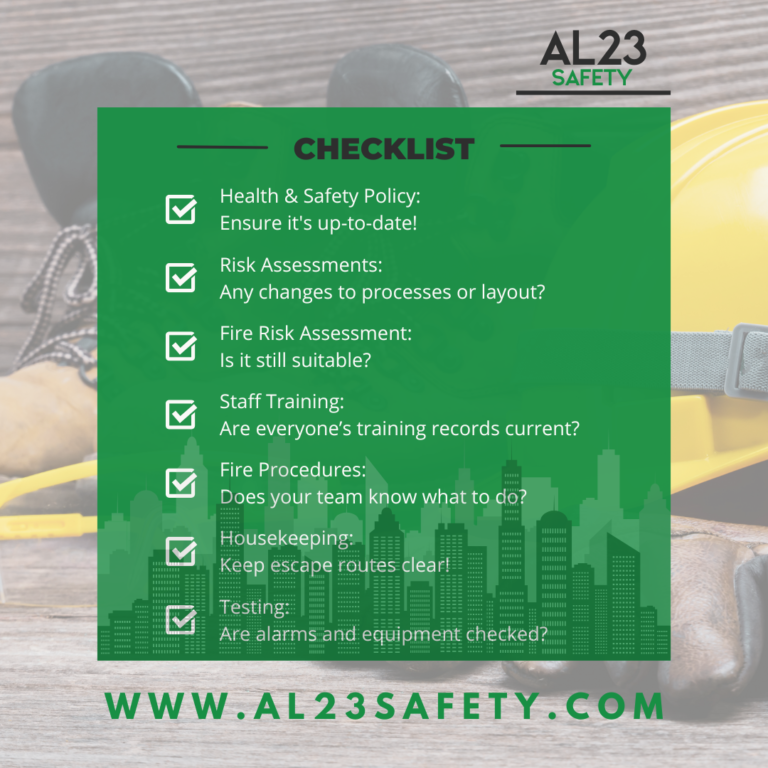
1. Review and Update Your Health and Safety Policy
Your health and safety policy is the foundation of everything you do. Start the year by confirming it accurately reflects current operations, roles, and responsibilities. Outdated policies can leave gaps that expose your business to risk. Schedule a thorough review involving senior management and employee representatives to ensure the document remains relevant and robust.
2. Refresh Risk Assessments
Risk assessments are not a “once-and-done” exercise. Whenever processes, equipment, staffing, or layouts change, assessments must be revisited. Beginning the year with a complete review of all general and activity-specific risk assessments helps identify emerging hazards early. Document any new control measures and communicate them clearly to the team.
3. Validate Your Fire Risk Assessment
A current and site-specific fire risk assessment is a legal requirement under the Regulatory Reform (Fire Safety) Order 2005. Essential health and safety checks must include verifying that your fire risk assessment still matches the premises and its use. Look for new ignition sources, changes in storage, or alterations to escape routes. If significant changes have occurred, commission a professional review without delay.
4. Deliver Targeted Staff Training
Well-trained employees are your strongest defence against incidents. Schedule induction training for new starters and refresher sessions for existing staff. Cover key topics such as manual handling, COSHH, display screen equipment, and, crucially, fire awareness. Practical training builds confidence and ensures everyone knows their role in maintaining workplace health and safety.
5. Reinforce Fire Procedures and Evacuation Drills
Every employee should know exactly what to do if the fire alarm sounds. Display clear evacuation plans, appoint and train fire wardens, and conduct a full evacuation drill early in the year. Observing how the drill unfolds often highlights areas for improvement blocked exits, confusion over assembly points, or communication gaps, that can be swiftly corrected.
6. Raise Housekeeping Standards
Good housekeeping is fundamental to safety. Cluttered walkways, overflowing bins, and poorly stored materials can turn minor incidents into serious ones. Encourage a “clean as you go” culture and perform regular inspections of escape routes, storage areas, and work stations. Simple habits make a significant difference when seconds count.
7. Test and Document Safety Equipment
Functional equipment saves lives. Include these critical tests in your essential health and safety checks:
- Weekly fire alarm sounder tests
- Monthly emergency lighting flicker tests
- Quarterly and annual fire extinguisher inspections
- Regular checks of first-aid kits and eyewash stations
Maintain a clear log of all tests, results, and any remedial actions taken. Accurate records demonstrate due diligence and make audits straightforward.
Why Prioritising Essential Health and Safety Checks Matters
Completing these checks early in the year sets a positive tone and embeds safety into daily operations. It reduces the likelihood of accidents, helps avoid enforcement action from the HSE, and can even lower insurance premiums. Most importantly, it sends a clear message to your team that their wellbeing is a priority.
How AL23 Safety Can Help
At AL23 Safety, we offer practical, jargon-free support tailored to your business. Whether you need a full health and safety policy overhaul, independent risk assessments, fire risk assessment reviews, or bespoke training programmes, our experienced consultants are here to guide you every step of the way.
Don’t leave workplace health and safety to chance. Contact AL23 Safety today to arrange a no-obligation discussion about your annual health and safety review. Together, we can make 2026 your safest year yet.