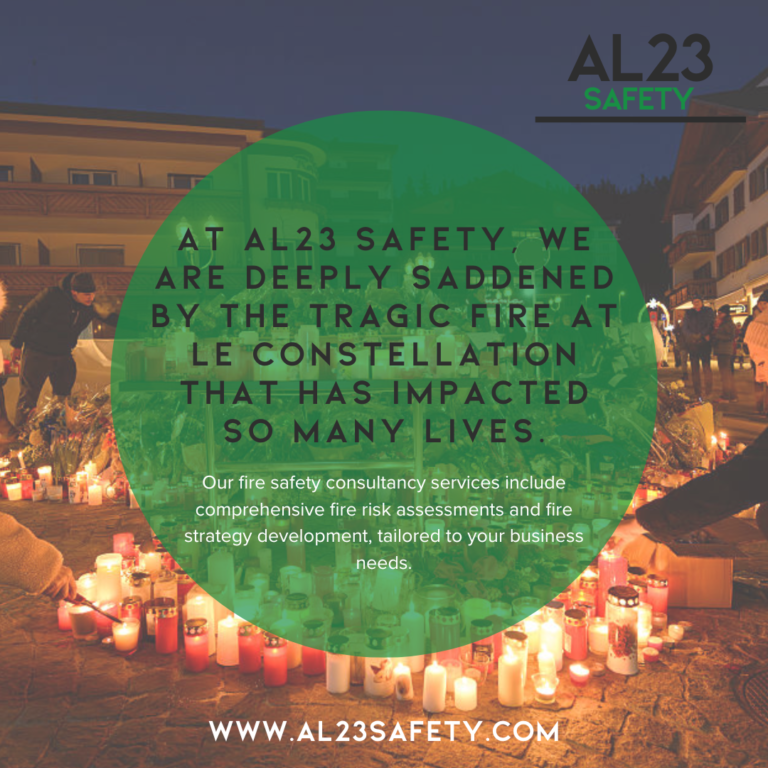
Prioritising fire safety has never been more critical following the heartbreaking Crans-Montana fire at Le Constellation bar on New Year’s Day 2026. This devastating incident, which resulted in the tragic loss of 40 lives and injuries to over 116 people, many suffering severe burns serves as a stark wake-up call for venues, businesses and organisations everywhere. What began as a celebratory night quickly turned into one of Switzerland’s worst modern tragedies, reportedly sparked by sparklers on champagne bottles igniting flammable ceiling materials in a crowded basement bar. The rapid spread of flames, compounded by questions over fire inspections (none since 2019), locked exits and inadequate safety measures, highlights how quickly preventable risks can escalate into catastrophe.
In the UK, prioritising fire safety remains a legal and moral imperative under the Regulatory Reform (Fire Safety) Order 2005. This legislation requires responsible persons, typically business owners or managers, to conduct suitable and sufficient fire risk assessments, implement control measures and ensure ongoing compliance. The Crans-Montana fire tragedy underscores that lapses in these areas can have devastating consequences, regardless of location or venue type. Whether you’re running a pub, nightclub, office, warehouse or retail space, the principles are the same: proactive prevention saves lives.
Why Prioritising Fire Safety Must Be Non-Negotiable
The Crans-Montana fire exposed several critical failures that resonate strongly with UK businesses. Initial investigations pointed to ignition from novelty sparklers held too close to the ceiling, leading to a rapid flashover. Reports also raised concerns about missing regular inspections, potentially absent or inaccessible fire extinguishers, no sprinkler system and issues with escape routes. These elements mirror common pitfalls seen in UK premises where corners are cut on maintenance or training.
Fire safety regulations in the UK demand more than just ticking boxes. They require a dynamic approach: identifying hazards, evaluating who might be at risk (including vulnerable groups like young people, as tragically seen in Crans-Montana where many victims were teenagers) and putting robust controls in place. At AL23 Safety, we specialise in helping businesses navigate these requirements with precision and practicality. Our expert consultants bring deep knowledge of UK legislation combined with hands-on experience across sectors from hospitality and leisure to manufacturing and education.
The Power of Comprehensive Fire Risk Assessments
A cornerstone of prioritising fire safety is the fire risk assessment. This isn’t a one-off document to file away; it’s a living process that must be reviewed regularly, especially after changes to premises, operations or following near-misses. In the wake of events like the Crans-Montana fire, many UK venues are reassessing their setups to check for similar vulnerabilities flammable decorations, overcrowding risks or outdated equipment.
AL23 Safety conducts thorough, tailored fire risk assessments that go beyond compliance. We identify hidden dangers, recommend practical solutions and provide clear action plans. Our assessments cover everything from ignition sources and fuel loads to means of escape, fire detection and suppression systems. By addressing these proactively, businesses can significantly reduce the likelihood of a fire starting or spreading uncontrollably.
Essential Steps to Strengthen Workplace Fire Safety
To truly embed prioritising fire safety in your organisation, consider these key actions inspired by lessons from recent tragedies:
- Employee Training and Awareness – Regular fire safety training ensures staff know how to spot risks, use extinguishers and respond calmly in emergencies. Fire drills build muscle memory and confidence.
- Equipment Maintenance -Fire alarms, extinguishers, emergency lighting and exits must be checked routinely. In Crans-Montana, questions over equipment accessibility amplified the tragedy, don’t let this happen in your premises.
- Clear Evacuation Procedures – Routes must be unobstructed, well-signposted and suitable for all occupants. Special consideration for vulnerable individuals is vital.
- Ongoing Reviews – Update your fire strategy after any building work, change in use or incident elsewhere that highlights new risks.
AL23 Safety has supported countless clients in implementing these measures successfully. From a Manchester nightclub that overhauled its evacuation plan to a retail chain that upgraded detection systems across sites, our tailored strategies have delivered measurable improvements in safety and compliance. These real-world examples demonstrate that effective fire safety regulations adherence protects lives, safeguards property and provides invaluable peace of mind.
Take Action Before It’s Too Late
The Crans-Montana fire tragedy is a devastating reminder that fire can strike anywhere, anytime, especially in social venues packed with people. Prioritising fire safety isn’t optional; it’s essential to prevent history from repeating itself. Don’t wait for an incident to prompt change.
At AL23 Safety, we’re committed to empowering UK businesses with the tools, knowledge and support needed to achieve exemplary standards. Contact our team today for a professional consultation, fire risk assessment or bespoke training programme. Together, we can build safer environments and honour the lessons from tragedies like Crans-Montana by ensuring they never occur here.
![Creating a Safer Workplace: The Importance of Health and Fire Safety Services In today's business environment, prioritising health and fire safety is not just a regulatory obligation but a moral imperative. With the constant evolution of legislation and safety standards, businesses must stay informed and compliant to protect their employees and assets. At AL23 Safety, our comprehensive range of services supports you in developing a safer, more compliant, and productive workplace. Understanding the Legislative Landscape To create a robust health and safety culture, businesses must understand the intricate web of UK regulations that govern workplace safety. The Health and Safety at Work Act 1974, the Regulatory Reform (Fire Safety) Order 2005, and the Management of Health and Safety at Work Regulations 1999, among others, set the foundation for compliance. Our consultants at AL23 Safety leverage extensive knowledge of these laws to provide tailored strategies, ensuring you meet and exceed compliance expectations. Tailored Fire Risk Assessments One of our core offerings is detailed fire risk assessments. The Regulatory Reform (Fire Safety) Order mandates that businesses conduct thorough assessments to identify fire hazards, evaluate risks, and implement control measures. We employ a meticulous approach by analysing the specific needs of your establishment, ensuring that every potential risk is addressed effectively. Fire Strategy Development In conjunction with risk assessments, we develop bespoke fire strategies that align with your unique operational needs. This proactive planning not only helps in compliance but significantly reduces the likelihood of incidents, creating a safer environment for everyone. Our approach is data-driven, allowing us to implement strategies supported by best practice guidelines and industry standards. Ongoing Support and Training Safety doesn’t stop at implementation. AL23 Safety offers ongoing support and training to ensure your team is equipped to handle emergencies. Our training sessions cover essential areas, including fire safety protocols, evacuation procedures, and equipment handling. With 24/7 access to our consultancy services, you can navigate challenges with confidence, knowing that expert advice is just a call away. Empowering Your Business Through Safety At AL23 Safety, we are dedicated to empowering businesses by cultivating an environment of safety that nurtures productivity and innovation. Our hands-on consultants are not just experts; they are your partners in achieving a culture of excellence in health and safety. Partnering with us means choosing a future where safety is ingrained in every aspect of your operations. Let us help you navigate the complexities of health and fire safety. Discover our tailored services that can transform your workplace into a model of compliance and safety excellence. [Visit our services] for more information.](https://al23safety.com/wp-content/uploads/2026/04/CreatingaSaferWorkplaceTheEssentialRoleofHealthandFireSafetyServices.png)