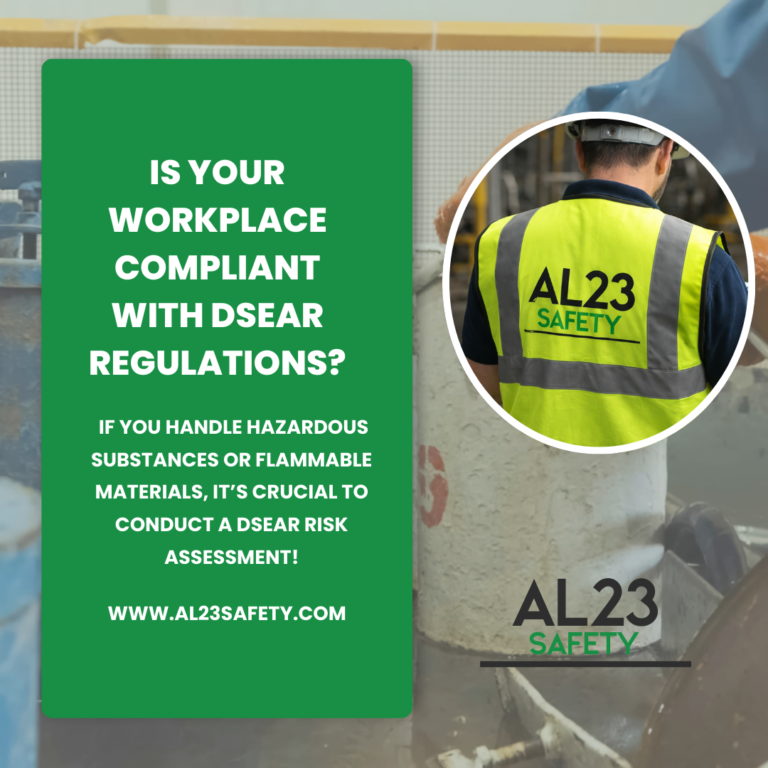
DSEAR Risk Assessments are a cornerstone of workplace safety for any UK business that handles or stores dangerous substances. These specialised evaluations help identify and control the risks of fire, explosion and corrosion from hazardous materials, ensuring full compliance with the Dangerous Substances and Explosive Atmospheres Regulations 2002 (DSEAR). At AL23 Safety, we specialise in delivering bespoke DSEAR Risk Assessments that protect your team, safeguard your operations and keep your business legally compliant.
In an era where workplace incidents can lead to severe consequences, prioritising DSEAR Risk Assessments is not optional, it’s a proactive step towards a safer, more resilient environment. Whether you’re in manufacturing, chemicals, pharmaceuticals or any sector involving flammable liquids, gases, vapours or dusts, understanding and implementing these assessments is vital.
Why DSEAR Risk Assessments Are Essential for UK Businesses
The Dangerous Substances and Explosive Atmospheres Regulations (DSEAR) place a legal duty on employers to eliminate or reduce risks from dangerous substances that could cause fires, explosions or metal corrosion. According to HSE guidance, these regulations apply across most workplaces where such substances are present, used or stored.
Conducting thorough DSEAR Risk Assessments delivers multiple critical benefits:
- Legal Compliance – Non-compliance can result in hefty fines, enforcement notices, prosecution and reputational damage. Regular DSEAR assessments demonstrate due diligence and help avoid costly penalties.
- Employee Protection – The primary goal is to prevent harm. By identifying hazards early, you protect workers from potentially catastrophic events.
- Business Continuity – Proactive risk management minimises downtime from incidents, accidents or regulatory shutdowns, leading to smoother operations and cost savings.
- Improved Safety Culture – Employees feel valued when risks are managed effectively, boosting morale and productivity.
- Risk Reduction – Assessments enable the elimination or substitution of hazards where possible, followed by robust controls.
- Zoning and Equipment Safety – Proper classification of hazardous areas prevents ignition sources in explosive atmospheres.
- Insurance and Stakeholder Confidence – Insurers and clients often require evidence of DSEAR compliance, making assessments a competitive advantage.
The Step-by-Step Process of Conducting Effective DSEAR Risk Assessments
A successful DSEAR risk assessment follows a structured, systematic approach aligned with HSE recommendations. Here’s how it’s typically carried out:
- Identify Dangerous Substances Begin by listing all substances in the workplace that qualify as “dangerous” under DSEAR. This includes flammable liquids (e.g. solvents, paints), gases, vapours, combustible dusts and substances corrosive to metals. Review safety data sheets (SDS), inventories and processes to ensure nothing is overlooked.
- Determine How Substances Are Used and Stored Map out where and how these materials are handled, including quantities, storage conditions and work activities. Consider normal operations as well as maintenance, cleaning or emergencies.
- Assess the Risks Evaluate the likelihood and severity of fire, explosion or corrosion events. Key factors include ignition sources (e.g., sparks, hot surfaces, static electricity), quantities involved, ventilation and potential for explosive atmospheres. Who might be harmed and how?
- Classify Hazardous Zones Where explosive atmospheres could occur, classify areas into zones (e.g., Zone 0, 1, 2 for gases; Zone 20, 21, 22 for dusts). This informs equipment selection and controls.
- Implement Control Measures Follow the hierarchy: eliminate the hazard first (substitute safer alternatives), then reduce risks through engineering controls (ventilation, containment), administrative measures (procedures, training) and finally PPE as a last resort. Avoid ignition sources in zoned areas by using ATEX-rated equipment.
- Document Everything Record findings, controls, responsible persons and review dates. Documentation proves compliance during inspections or incidents.
- Review and Update RegularlyDSEAR Risk Assessments must be reviewed periodically or whenever significant changes occur (new substances, processes, equipment or incidents). At AL23 Safety, we recommend annual reviews or after any material change.
Real-World Benefits: How DSEAR Assessments Make a Difference
Many businesses discover hidden risks through professional DSEAR assessments. For instance, a manufacturing client we worked with struggled with flammable solvents in production. Our comprehensive assessment pinpointed multiple ignition sources, inadequate zoning and insufficient controls. Implementing our recommendations, such as improved ventilation, ATEX equipment and staff training, achieved full DSEAR compliance, reduced risks dramatically and enhanced overall safety confidence.
These transformations are common. Effective Risk Assessments not only prevent disasters but also foster a proactive safety mindset across the organisation.
Partner with AL23 Safety for Expert DSEAR Risk Assessments
At AL23 Safety, our experienced consultants tailor DSEAR Risk Assessments to your specific operations, ensuring practical, cost-effective solutions. We go beyond basic compliance to deliver real risk reduction and peace of mind.
Don’t leave safety to chance. Contact AL23 Safety today for a professional risk assessment that safeguards your people, protects your business and ensures ongoing DSEAR compliance. Visit our services page to learn more and schedule your consultation.
![Creating a Safer Workplace: The Importance of Health and Fire Safety Services In today's business environment, prioritising health and fire safety is not just a regulatory obligation but a moral imperative. With the constant evolution of legislation and safety standards, businesses must stay informed and compliant to protect their employees and assets. At AL23 Safety, our comprehensive range of services supports you in developing a safer, more compliant, and productive workplace. Understanding the Legislative Landscape To create a robust health and safety culture, businesses must understand the intricate web of UK regulations that govern workplace safety. The Health and Safety at Work Act 1974, the Regulatory Reform (Fire Safety) Order 2005, and the Management of Health and Safety at Work Regulations 1999, among others, set the foundation for compliance. Our consultants at AL23 Safety leverage extensive knowledge of these laws to provide tailored strategies, ensuring you meet and exceed compliance expectations. Tailored Fire Risk Assessments One of our core offerings is detailed fire risk assessments. The Regulatory Reform (Fire Safety) Order mandates that businesses conduct thorough assessments to identify fire hazards, evaluate risks, and implement control measures. We employ a meticulous approach by analysing the specific needs of your establishment, ensuring that every potential risk is addressed effectively. Fire Strategy Development In conjunction with risk assessments, we develop bespoke fire strategies that align with your unique operational needs. This proactive planning not only helps in compliance but significantly reduces the likelihood of incidents, creating a safer environment for everyone. Our approach is data-driven, allowing us to implement strategies supported by best practice guidelines and industry standards. Ongoing Support and Training Safety doesn’t stop at implementation. AL23 Safety offers ongoing support and training to ensure your team is equipped to handle emergencies. Our training sessions cover essential areas, including fire safety protocols, evacuation procedures, and equipment handling. With 24/7 access to our consultancy services, you can navigate challenges with confidence, knowing that expert advice is just a call away. Empowering Your Business Through Safety At AL23 Safety, we are dedicated to empowering businesses by cultivating an environment of safety that nurtures productivity and innovation. Our hands-on consultants are not just experts; they are your partners in achieving a culture of excellence in health and safety. Partnering with us means choosing a future where safety is ingrained in every aspect of your operations. Let us help you navigate the complexities of health and fire safety. Discover our tailored services that can transform your workplace into a model of compliance and safety excellence. [Visit our services] for more information.](https://al23safety.com/wp-content/uploads/2026/04/CreatingaSaferWorkplaceTheEssentialRoleofHealthandFireSafetyServices.png)