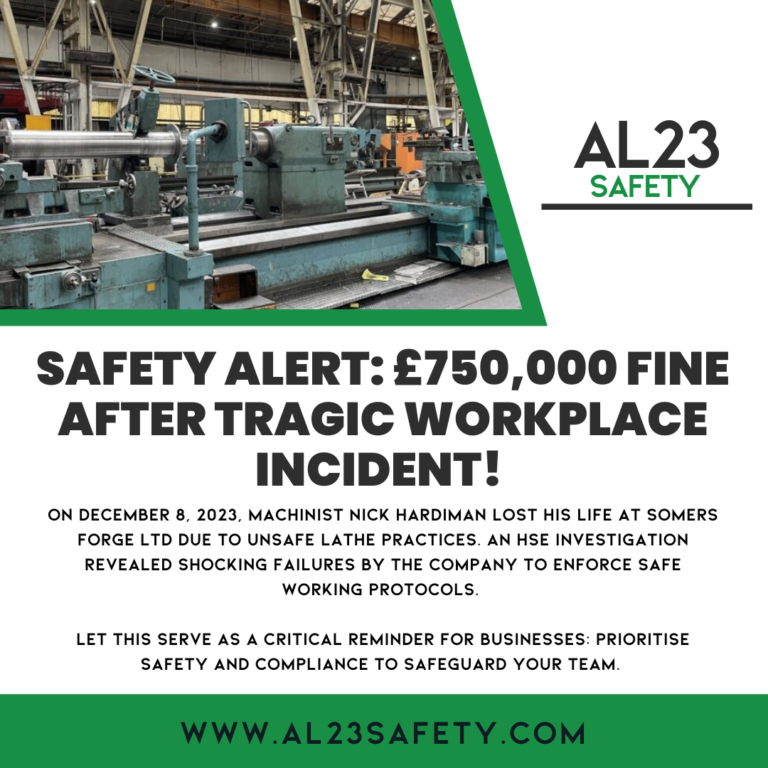
Workplace safety compliance is essential for protecting lives and avoiding catastrophic consequences, as tragically demonstrated by the Somers Forge Ltd incident. Machinist Nick Hardiman lost his life in a preventable accident involving a lathe, highlighting the urgent need for robust health and safety measures in industrial settings.
The incident occurred on 8 December 2023 at Somers Forge Limited in Halesowen, West Midlands. Nick Hardiman, aged 54 and from Kidderminster, was using handheld emery cloth to finish a rotating component on a 20-metre-long lathe when he became entangled in the machine’s dangerous moving parts, suffering fatal injuries. Despite emergency efforts, he died later that evening. The Health and Safety Executive (HSE) investigation uncovered serious failings: the company did not prohibit hazardous hand-polishing practices on rotating machinery, failed to prevent access to moving parts through adequate guarding and lacked suitable risk assessments and safe operating procedures. HSE guidance clearly states that emery cloth should never be applied directly by hand to rotating equipment.
Somers Forge Limited pleaded guilty to breaching Section 2(1) of the Health and Safety at Work etc. Act 1974. At Walsall Magistrates’ Court on 18 February 2026, the company was fined £750,000 and ordered to pay £38,314 in costs. HSE Inspector Sophie Neale described the death as “entirely preventable,” stressing that proper controls could have eliminated the risk.
This heartbreaking case reminds businesses that workplace safety compliance is a legal and moral imperative. Neglecting it risks lives, leads to severe penalties, causes family devastation and damages reputations. In high-risk industries like forging and machining, rotating machinery such as lathes presents ongoing dangers including entanglement, crushing and drawing-in. Strong workplace safety compliance mitigates these threats, enhances productivity, reduces absenteeism and demonstrates commitment to employee wellbeing.
The Vital Role of Workplace Safety Compliance in Preventing Machinery Accidents
Under UK legislation, including the Health and Safety at Work Act 1974, Provision and Use of Work Equipment Regulations (PUWER) and Management of Health and Safety at Work Regulations, employers must provide safe systems of work, suitable equipment and adequate training. The Somers Forge tragedy shows what happens when these duties are overlooked. Proactive workplace safety compliance prevents such outcomes and builds a positive safety culture where employees feel valued and protected.
5 Essential Steps to Strengthen Workplace Safety Compliance
To safeguard your workforce and avoid similar incidents, focus on these key areas:
1. Perform Detailed and Regular Risk Assessments
Effective workplace safety compliance starts with comprehensive risk assessments. Identify hazards from machinery, processes and tasks, such as using handheld abrasives on rotating parts. Involve competent assessors, document controls (prioritising elimination and engineering solutions) and review assessments regularly or after changes. The absence of proper assessments at Somers Forge allowed unsafe practices to continue unchecked.
2. Provide Thorough Employee Training and Competency Checks
Train all staff on machinery hazards, safe operating methods and emergency responses. Cover specific prohibitions like hand-applying emery cloth to lathes. Use practical demonstrations, refresher courses and competency assessments. Well-trained employees recognise risks and follow protocols, significantly reducing accident likelihood.
3. Develop and Enforce Safe Systems of Work with Proper Guarding
Create clear, written procedures for every high-risk task. Implement fixed guards, interlocked enclosures, trip devices and emergency stops to prevent access to danger zones. Ban unsafe manual techniques and ensure PPE (if needed) does not introduce further risks, such as entanglement from loose gloves or clothing. Engineering controls must take precedence over administrative ones.
4. Maintain Full Adherence to HSE Legislation and Guidance
Keep abreast of HSE regulations, approved codes of practice and sector-specific advice. For lathes and similar equipment, comply with PUWER requirements for inspection, maintenance and operator safeguards. Workplace safety compliance involves ongoing monitoring to ensure standards are met, not just during audits or after incidents.
5. Establish Continuous Monitoring, Audits and Professional Support
Promote a safety-first culture through regular inspections, near-miss reporting, employee consultations and independent audits. Engage experienced health and safety consultants for objective evaluations and tailored recommendations. Continuous improvement identifies emerging risks and reinforces commitment to workplace safety compliance.
Partner with AL23 Safety for Expert Workplace Safety Compliance Support
At AL23 Safety, we help organisations across the UK achieve outstanding workplace safety compliance. Our consultants provide 24/7 guidance, bespoke risk assessments, accredited training programmes, safe systems development and preparation for HSE interactions. Specialising in manufacturing and engineering sectors, we prevent tragedies like the Somers Forge incident by addressing root causes before harm occurs.
Investing in workplace safety compliance protects your team, avoids fines and fosters trust. Contact AL23 Safety today to discuss how our services can strengthen your health and safety framework. Prioritise safety, ensure every employee returns home safely.
![Creating a Safer Workplace: The Importance of Health and Fire Safety Services In today's business environment, prioritising health and fire safety is not just a regulatory obligation but a moral imperative. With the constant evolution of legislation and safety standards, businesses must stay informed and compliant to protect their employees and assets. At AL23 Safety, our comprehensive range of services supports you in developing a safer, more compliant, and productive workplace. Understanding the Legislative Landscape To create a robust health and safety culture, businesses must understand the intricate web of UK regulations that govern workplace safety. The Health and Safety at Work Act 1974, the Regulatory Reform (Fire Safety) Order 2005, and the Management of Health and Safety at Work Regulations 1999, among others, set the foundation for compliance. Our consultants at AL23 Safety leverage extensive knowledge of these laws to provide tailored strategies, ensuring you meet and exceed compliance expectations. Tailored Fire Risk Assessments One of our core offerings is detailed fire risk assessments. The Regulatory Reform (Fire Safety) Order mandates that businesses conduct thorough assessments to identify fire hazards, evaluate risks, and implement control measures. We employ a meticulous approach by analysing the specific needs of your establishment, ensuring that every potential risk is addressed effectively. Fire Strategy Development In conjunction with risk assessments, we develop bespoke fire strategies that align with your unique operational needs. This proactive planning not only helps in compliance but significantly reduces the likelihood of incidents, creating a safer environment for everyone. Our approach is data-driven, allowing us to implement strategies supported by best practice guidelines and industry standards. Ongoing Support and Training Safety doesn’t stop at implementation. AL23 Safety offers ongoing support and training to ensure your team is equipped to handle emergencies. Our training sessions cover essential areas, including fire safety protocols, evacuation procedures, and equipment handling. With 24/7 access to our consultancy services, you can navigate challenges with confidence, knowing that expert advice is just a call away. Empowering Your Business Through Safety At AL23 Safety, we are dedicated to empowering businesses by cultivating an environment of safety that nurtures productivity and innovation. Our hands-on consultants are not just experts; they are your partners in achieving a culture of excellence in health and safety. Partnering with us means choosing a future where safety is ingrained in every aspect of your operations. Let us help you navigate the complexities of health and fire safety. Discover our tailored services that can transform your workplace into a model of compliance and safety excellence. [Visit our services] for more information.](https://al23safety.com/wp-content/uploads/2026/04/CreatingaSaferWorkplaceTheEssentialRoleofHealthandFireSafetyServices.png)