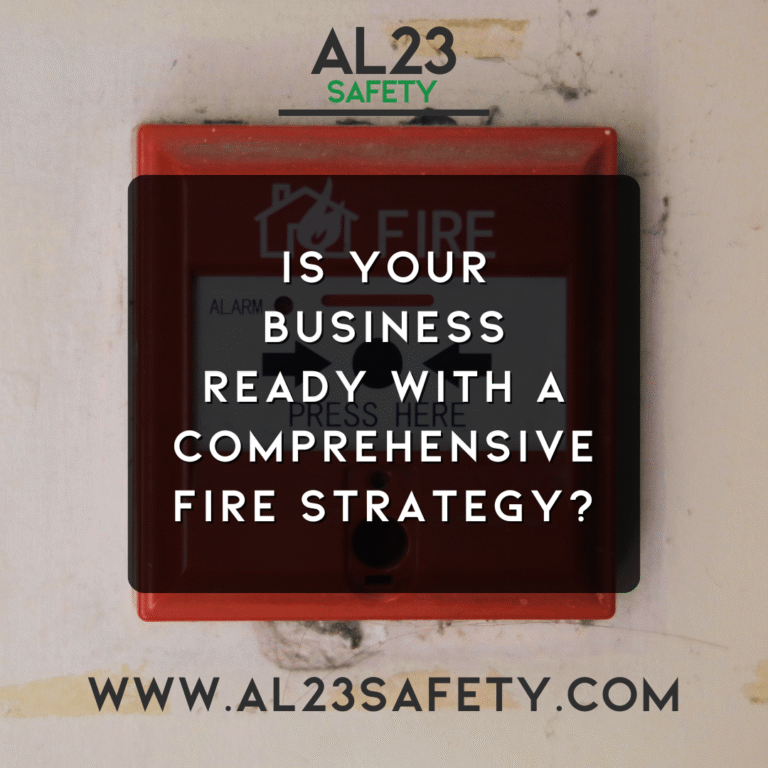
A comprehensive fire strategy is the cornerstone of modern workplace safety. In an era where businesses face ever-increasing risks, having a robust and well-executed plan is not just good practice, it’s essential for protecting lives, property, and continuity. At AL23 Safety, we believe every UK business deserves a fire strategy that goes beyond basic compliance to deliver real protection.
Why Your Business Needs a Comprehensive Fire Strategy Today
Under the Regulatory Reform (Fire Safety) Order 2005, every responsible person in a business must take proactive steps to manage fire risks. A comprehensive fire strategy ensures you meet these legal obligations while creating a safer environment for employees, visitors, and assets. Without one, organisations risk devastating consequences from loss of life to severe financial and reputational damage.
The best fire strategy integrates prevention, detection, response, and recovery into a cohesive framework. It’s a living document that evolves with your business, adapting to structural changes, new equipment, or updated legislation.
The 7 Essential Steps to Building a Powerful Fire Strategy
- Conduct a Thorough Fire Risk Assessment The foundation of any comprehensive fire strategy begins with a professional fire risk assessment. This process identifies hazards, evaluates existing controls, and highlights areas for improvement. UK regulations require these assessments to be carried out by a competent person and reviewed regularly particularly after any significant workplace changes.
- Implement Robust Fire Prevention Measures Prevention is always better than cure. Your comprehensive fire strategy should include practical steps like using fire-resistant materials, safe storage of flammable substances, and regular electrical inspections. Simple measures, such as keeping escape routes clear and installing appropriate signage, can dramatically reduce fire risks.
- Develop Clear Emergency Response Procedures A strong comprehensive fire strategy includes detailed evacuation plans, designated assembly points, and clear communication protocols. Assign specific roles – fire wardens, first aiders, and roll-call coordinators to ensure orderly responses during emergencies.
- Invest in Regular Staff Training and Drills Even the most sophisticated comprehensive fire strategy fails without properly trained people. Regular fire safety training sessions and realistic drills help employees understand their responsibilities and react calmly under pressure. These exercises also reveal weaknesses in your plan before a real incident occurs.
- Maintain and Test Critical Safety Equipment Fire alarms, extinguishers, sprinklers, and emergency lighting must be regularly inspected and serviced. Your comprehensive fire strategy should include a scheduled maintenance programme with documented records to demonstrate compliance during inspections.
- Establish Effective Incident Management Protocols Post-incident procedures are often overlooked but crucial. A comprehensive fire strategy details how to secure the site, liaise with emergency services, and conduct thorough investigations to prevent recurrence.
- Commit to Continuous Review and Improvement Legislation, best practices, and your business itself change over time. Schedule annual reviews of your comprehensive fire strategy, or more frequently if significant changes occur. This proactive approach keeps your protection current and effective.
How AL23 Safety Helps You Create Your Comprehensive Fire Strategy
At AL23 Safety, we specialise in partnering with businesses across the UK to develop tailored fire safety solutions. Our experienced consultants conduct detailed risk assessments, help implement practical prevention measures, and guide you through creating a comprehensive fire strategy that meets and often exceeds, regulatory requirements.
We understand that every workplace is unique. Whether you operate a small office in Manchester or a large industrial facility, we’ll work with you to build a comprehensive fire strategy that fits your specific needs, budget, and operational realities.
Taking the Next Step Towards Superior Fire Safety
Implementing a comprehensive fire strategy isn’t just about ticking boxes, it’s about creating genuine protection for your people and your business. The peace of mind that comes from knowing you’ve done everything possible to prevent and manage fire risks is invaluable.
Don’t wait for an incident to highlight gaps in your current arrangements. Contact AL23 Safety today to discuss how we can help you develop and implement a powerful comprehensive fire strategy that safeguards your business now and in the future.
Your employees, customers, and stakeholders deserve nothing less than the highest standards of fire safety. Let us help you achieve them.