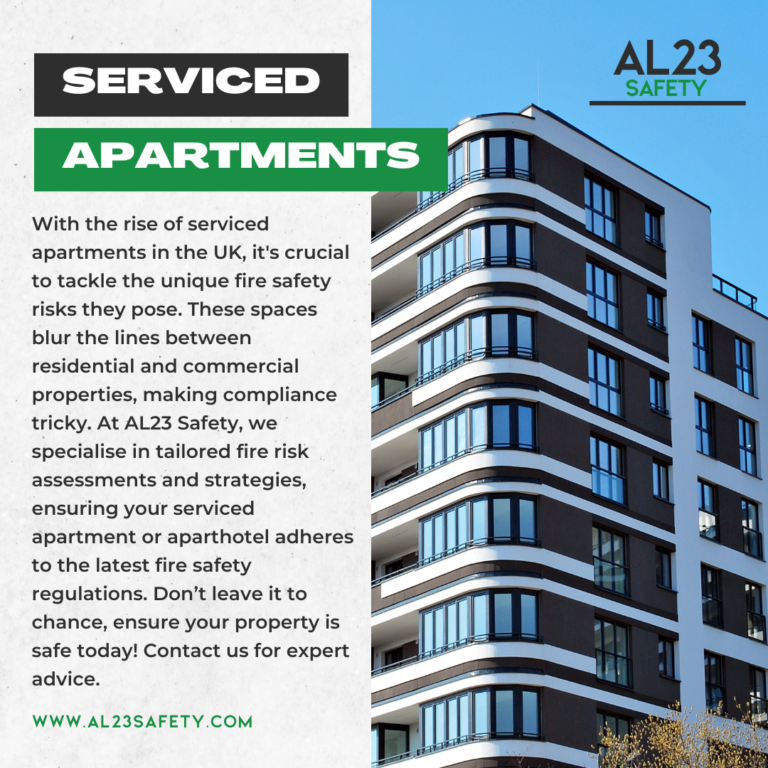
Fire safety in serviced apartments has become a critical concern as the UK experiences a significant surge in these flexible accommodations. With the market projected to grow from around £3.9 billion in 2024 to £8.8 billion by 2034 at a CAGR of 8.5% and strong growth expected in 2026 driven by corporate relocations and blended business-leisure travel, property owners and managers cannot afford to overlook the unique risks these properties present.
Serviced apartments and aparthotels blend the comfort of home with hotel-like services, attracting short-term guests, business travellers and longer-stay occupants. However, this mix creates distinct fire safety challenges that differ from traditional hotels or residential blocks.
Understanding Serviced Apartments: A Unique Challenge for Fire Safety in Serviced Apartments
Serviced apartments typically feature self-contained units with kitchens, living areas and bedrooms, often in city-centre locations or mixed-use developments. Unlike standard hotels, guests may cook meals, use electrical appliances extensively and stay for varying durations from a single night to several months. This variability in occupancy patterns complicates evacuation planning and risk management.
Recent industry reports highlight that corporate demand, including relocations in sectors like technology, finance and energy, is fuelling this expansion. Enquiries for staff relocations rose by 8% year-on-year in 2025, underscoring the need for reliable, safe accommodation options. Yet, with guests often unfamiliar with the building layout, the potential for delayed responses during a fire incident increases significantly.
Compliance and Regulatory Frameworks in Fire Safety for Serviced Apartments
One of the biggest hurdles in fire safety in serviced apartments is the regulatory grey area these properties occupy. Under the Regulatory Reform (Fire Safety) Order 2005, dwellings are generally excluded from full fire risk assessments but serviced apartments and aparthotels often fall outside this category due to their commercial, short-term nature.
Guidance from the Institution of Fire Engineers (IFE) and Fire Industry Association (FIA), published in late 2025, emphasises that these accommodations may not qualify as standard residential units. This affects whether assessments cover individual apartments or just common areas. Conversions of office buildings into aparthotels can trigger material changes of use under Building Regulations, requiring compliance with updated fire safety standards.
Failure to navigate these frameworks properly can lead to enforcement actions, fines or worse, tragic incidents. Owners must determine if their property falls under sleeping accommodation guidance from GOV.UK, which applies to hotels, guest houses and similar premises providing temporary lodging.
The Essential Role of Fire Risk Assessment in Serviced Apartments
A comprehensive fire risk assessment serviced apartments is far more than a compliance formality; it is the foundation of effective protection. This process identifies hazards specific to the property, such as cooking facilities in units, high guest turnover and potential for overloaded electrical sockets.
Key elements include evaluating:
- Layout and means of escape, considering low occupant familiarity
- Fire detection and alarm systems suitable for sleeping accommodation
- Emergency lighting and signage
- Firefighting equipment accessibility
- Staff training and guest communication protocols
Engaging qualified professionals ensures the assessment accounts for whether units are treated as non-dwellings, potentially extending coverage into individual apartments. Regular reviews, annually or after significant changes are vital, especially with the sector’s rapid growth.
Developing Effective Fire Strategies for Serviced Apartments
To mitigate risks, a robust fire strategy tailored to serviced apartments fire safety is indispensable. This should encompass:
- Regular staff training on evacuation procedures and emergency response
- Clear guest instructions upon check-in, including escape routes and assembly points
- Maintenance checks on fire doors, alarms, extinguishers and suppression systems
- Policies on smoking, candles and balcony barbecues to prevent ignition sources
- Consideration of vulnerable guests, with provisions for those with mobility issues
Adapting strategies to changing occupancy short-stay versus longer-term ensures flexibility. For instance, “stay put” policies common in blocks of flats may not suit transient guests, necessitating simultaneous evacuation approaches.
Why Prioritising Fire Safety in Serviced Apartments Pays Off
Investing in proactive fire safety in serviced apartments not only meets legal obligations but also builds guest confidence and protects your business reputation. In a competitive market where travellers seek safe, comfortable stays, demonstrating high safety standards can differentiate your property.
Moreover, compliance avoids costly penalties and potential closure orders. With increasing scrutiny from enforcing authorities and bodies like the Building Safety Regulator for higher-risk buildings, staying ahead is essential.
In Conclusion
The rapid rise of serviced apartments across the UK brings exciting opportunities but it also amplifies the need for vigilant fire safety in serviced apartments. By addressing regulatory complexities through expert-led fire risk assessments and tailored strategies, owners and managers can create secure environments that protect lives and enhance operational success.
At AL23 Safety, we specialise in delivering thorough, compliant solutions for serviced apartments and aparthotels. Our experienced consultants navigate these unique challenges to provide peace of mind. Contact us today to discuss how we can support your property with a professional fire risk assessment and bespoke fire safety strategy.