Vibration risk management is no longer optional in today’s workplaces. The recent prosecution and substantial fine imposed on Nottingham City Homes Limited serves as a stark warning to all UK employers: failing to address vibration risks can lead to severe financial penalties, legal consequences, and irreversible harm to employees.
In this post, we explore the dangers of excessive vibration exposure, the legal obligations under UK regulations, and practical steps for effective vibration risk management. We’ll also explain how AL23 Safety can support your organisation in building a robust, compliant system that protects both your workforce and your business.
Understanding Hand-Arm Vibration Syndrome (HAVS)
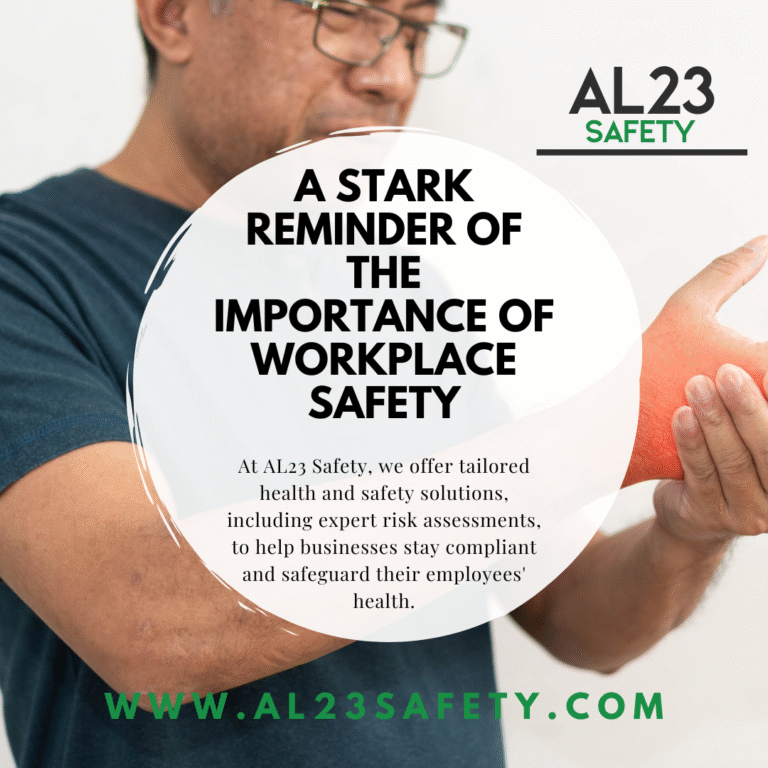
Hand-Arm Vibration Syndrome (HAVS) is a permanent and often debilitating condition caused by regular exposure to vibration through hand-held or hand-guided tools and machinery. Early symptoms include tingling and numbness in the fingers, but over time it can progress to loss of grip strength, pain, and reduced dexterity. In severe cases, workers may struggle with everyday tasks such as buttoning a shirt or holding a cup.
The Nottingham City Homes case highlighted multiple employees suffering long-term health effects because adequate vibration risk management measures were not in place. This preventable outcome underscores why proactive action is essential.
The Legal Obligations for Vibration Risk Management
UK employers are governed by two key pieces of legislation:
- The Health and Safety at Work etc. Act 1974 the overarching duty to ensure, so far as is reasonably practicable, the health, safety, and welfare of employees.
- The Control of Vibration at Work Regulations 2005, specific requirements for both hand-arm vibration and whole-body vibration.
These regulations set clear Exposure Action Values (EAV) and Exposure Limit Values (ELV):
- Hand-arm vibration: Daily EAV = 2.5 m/s² A(8); ELV = 5 m/s² A(8)
Employers must:
- Carry out suitable and sufficient risk assessments.
- Eliminate or reduce exposure to as low as reasonably practicable (ALARP).
- Implement health surveillance where risks remain significant.
- Provide information, instruction, and training to employees.
Failure to meet these duties can result in enforcement notices, prohibition orders, and, as seen recently, fines reaching hundreds of thousands of pounds.
Key Steps for Effective Workplace Vibration Risks Control
Successful vibration risk management follows a structured hierarchy of control:
1. Accurate Risk Assessment
Identify all vibrating tools and processes, measure or estimate exposure levels, and evaluate daily trigger times. Modern hand-held dosimeters and vibration databases make this process straightforward and reliable.
2. Engineering Controls
- Select low-vibration tools when purchasing new equipment.
- Maintain tools regularly, worn anti-vibration mounts or unbalanced blades dramatically increase exposure.
- Introduce job rotation and exposure time limits to keep individual daily doses below the EAV.
3. Administrative Controls
- Develop safe systems of work.
- Provide comprehensive training on correct tool handling techniques that minimise transmitted vibration.
- Display warning signs and exposure records in relevant areas.
4. Health Surveillance
Implement tiered health surveillance programmes (from questionnaires to clinical examinations) for employees regularly exceeding the EAV. Early detection can prevent permanent damage and provide vital evidence of effective management.
5. Personal Protective Equipment
Anti-vibration gloves can offer limited additional protection but should never be relied upon as the primary control measure.
Why Choose AL23 Safety for Your Vibration Risk Management Needs?
At AL23 Safety, our IOSH- and BOHS-qualified consultants specialise in practical, cost-effective vibration risk management solutions tailored to your industry whether construction, manufacturing, grounds maintenance, or facilities management.
We provide:
- Comprehensive vibration risk assessments using the latest measurement technology.
- Detailed exposure calculations and prioritised action plans.
- Assistance with tool selection and procurement advice for lower-vibration alternatives.
- Bespoke training packages for managers and operatives.
- Ongoing health surveillance programmes and annual reviews.
By partnering with AL23 Safety, you gain peace of mind that your vibration risk management processes meet current HSE expectations and withstand scrutiny during inspections.
Take Action Today – Protect Your People and Your Business
The Nottingham City Homes prosecution demonstrates that regulators are taking vibration-related breaches seriously. With fines escalating and reputational damage a real threat, now is the time to review your arrangements.
Don’t wait for an incident or enforcement visit. Contact AL23 Safety today for a no-obligation discussion about how we can strengthen your vibration risk management framework and help you create a safer, more compliant workplace.
Investing in proper vibration exposure control and HAVS prevention not only safeguards employee health but also reduces absenteeism, improves productivity, and protects your organisation from costly legal action.
Reach out to our team now and let us guide you towards best-practice workplace vibration risks management that stands the test of time.