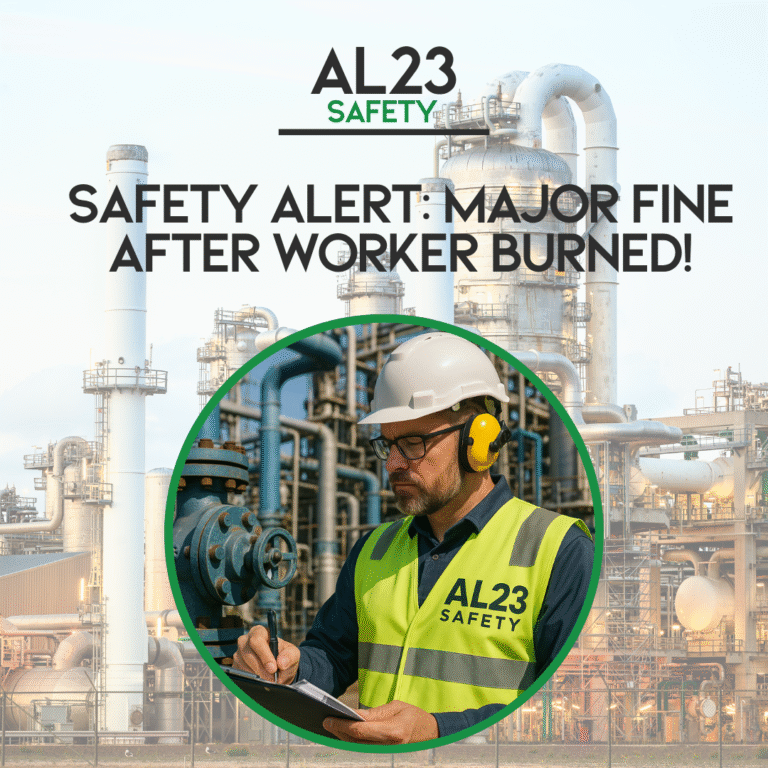
Workplace safety culture is the backbone of any high-hazard operation. When it falters, the consequences can be life-changing. A Scottish chemical firm, Dundas Chemical Company, was fined £100,000 after a 23-year-old worker suffered severe burns while cleaning a process water tank. This preventable incident underscores how fragile workplace culture becomes without rigorous systems, training, and accountability. AL23 Safety examines the case and distils five actionable lessons for chemical industry leaders.
The Incident: A Preventable Tragedy
In October 2019, the young employee was using an uninsulated steam hose to clean a tank. The hose lacked a trigger and flow-control mechanism, and a faulty steam mixing valve known to supervisors, remained unrepaired. Scalding steam erupted, inflicting burns over a significant portion of his body. Permanent scarring and a lengthy recovery followed. The Health and Safety Executive (HSE) deemed the event entirely avoidable, highlighting a broken workplace culture.
HSE Investigation: Systemic Failures Exposed
The HSE probe uncovered multiple lapses:
- Unsafe Equipment: The steam hose nozzle was defective and lacked essential safety controls.
- Maintenance Neglect: Supervisors knew the steam mixing valve was faulty yet failed to act.
- Inadequate Training: Workers received minimal instruction on high-pressure equipment risks and emergency procedures.
These findings reveal a workplace safety culture that treated hazards as routine rather than urgent.
5 Critical Lessons to Strengthen Workplace Safety Culture
1. Prioritise Rigorous Risk Assessment
Conduct thorough risk assessments before every high-hazard task. Identify steam, pressure, and chemical exposure risks, then engineer controls such as insulated hoses and automatic shut-offs. A robust risk assessment process is the foundation of chemical industry safety.
2. Enforce Relentless Equipment Maintenance
Schedule regular inspections and maintain detailed logs. A single faulty valve can trigger catastrophe. Proactive maintenance prevents burns, ensures compliance, and reinforces a workplace safety of accountability.
3. Deliver Comprehensive Safety Training
Training must be ongoing, not one-off. Cover equipment operation, hazard recognition, and emergency response. Refresher courses keep knowledge sharp and empower workers to act decisively. Effective safety training is non-negotiable in the chemical industry.
4. Cultivate Open Reporting Channels
Foster an environment where workers raise concerns without fear. Anonymous reporting systems and regular safety huddles turn potential incidents into preventive actions. A strong workplace safety thrives on trust and communication.
5. Guarantee Immediate Burns Prevention Measures
Install and maintain emergency showers, eyewash stations, and first-aid kits within seconds of every hazard zone. Test them monthly. Rapid response drastically reduces burn severity and demonstrates commitment to chemical industry safety.
The Financial and Human Cost of Inaction
The £100,000 fine pales beside the worker’s lifelong scars and trauma. Legal penalties, insurance hikes, and reputational damage compound the toll. Yet the deepest cost is human, pain that no fine can erase.
Building a Resilient Workplace Safety
Integrate these five lessons into daily operations:
- Embed risk assessment in work permits.
- Automate maintenance alerts.
- Mandate quarterly safety training.
- Celebrate near-miss reports.
- Audit emergency equipment routinely.
Chemical industry leaders who act decisively protect lives and avoid penalties.
How AL23 Safety Can Help
AL23 Safety provides tailored consultancy to transform your workplace safety. From gap analyses to bespoke training programmes, we deliver measurable improvements. Our experts have guided chemical plants to zero-recordable incidents through practical, HSE-aligned solutions.
Don’t wait for the next fine or the next injury. Contact AL23 Safety today to schedule a no-obligation safety culture review. Secure your team, strengthen chemical industry safety, and lead with confidence.