7 Powerful Ways AL23 Safety Delivers Tailored Health and Fire Safety Solutions for UK Businesses
**Creating Safe Workplaces: Why AL23 Safety is Your Go-To Health and Fire Safety Consultant** In the ever-evolving landscape of workplace safety, ensuring a secure environment for employees is non-negotiable. For businesses in the UK, navigating health and fire safety regulations can be a complex challenge. At AL23 Safety, we specialise in providing a full suite of health and fire safety services that support your organisation in creating a compliant, productive, and safe workplace. Understanding the breadth of our services is essential for businesses that want not only to adhere to legal requirements but also to foster a culture of safety and wellbeing. Our hands-on experience and in-depth knowledge allow us to provide tailored solutions that address each organisation's unique risks. **What We Offer** At AL23 Safety, we cover a comprehensive range of safety services, including: 1. **Fire Risk Assessments**: These assessments are crucial for identifying potential fire hazards and assessing the existing safety measures in place. Our thorough evaluations ensure that your organisation complies with the Regulatory Reform (Fire Safety) Order 2005. 2. **Fire Strategy Development**: Each business's fire strategy is custom-built considering specific operational needs. We help you create actionable plans to mitigate risks while ensuring compliance with legal obligations. 3. **Ongoing Support and Training**: Safety doesn't stop at compliance. Our consultants offer 24/7 support, ensuring your team is trained and prepared for any emergencies. 4. **Health and Safety Policies**: Developing clear, regulatory-compliant health and safety policies is essential. We work with you to ensure that your organisation has robust frameworks in place and that all employees are informed and engaged. **Real-World Impact** Our approach has transformed safety cultures in diverse sectors, showcasing our commitment to tailored strategies. For instance, after engaging with a manufacturing client facing numerous safety challenges, we conducted tailored fire risk assessments and developed a comprehensive fire strategy. As a result, they reported a dramatic decrease in fire-related incidents and employee concerns, leading to a more confident workplace. **Why Choose AL23 Safety?** We pride ourselves on our knowledge, reliability, and innovative solutions. Our commitment to staying current with UK legislation and industry best practices ensures our clients receive the best possible support. With AL23 Safety, you gain a partner who genuinely cares about your safety and compliance journey. Whether you are looking to enhance your workplace safety or develop a robust fire strategy, our dedicated team is here to support you every step of the way. Contact us today to explore how our tailored services can help your business achieve the highest standards of health and fire safety.

In today’s fast-moving regulatory environment, achieving tailored health and fire safety solutions is no longer optional, it’s essential for protecting your people, your assets, and your reputation. At AL23 Safety, we go beyond generic checklists. We partner with organisations across the UK to deliver personalised, practical, and fully compliant safety systems that fit your exact […]

E-Bike Fires: The Fast-Growing Danger UK Businesses Can No Longer Ignore
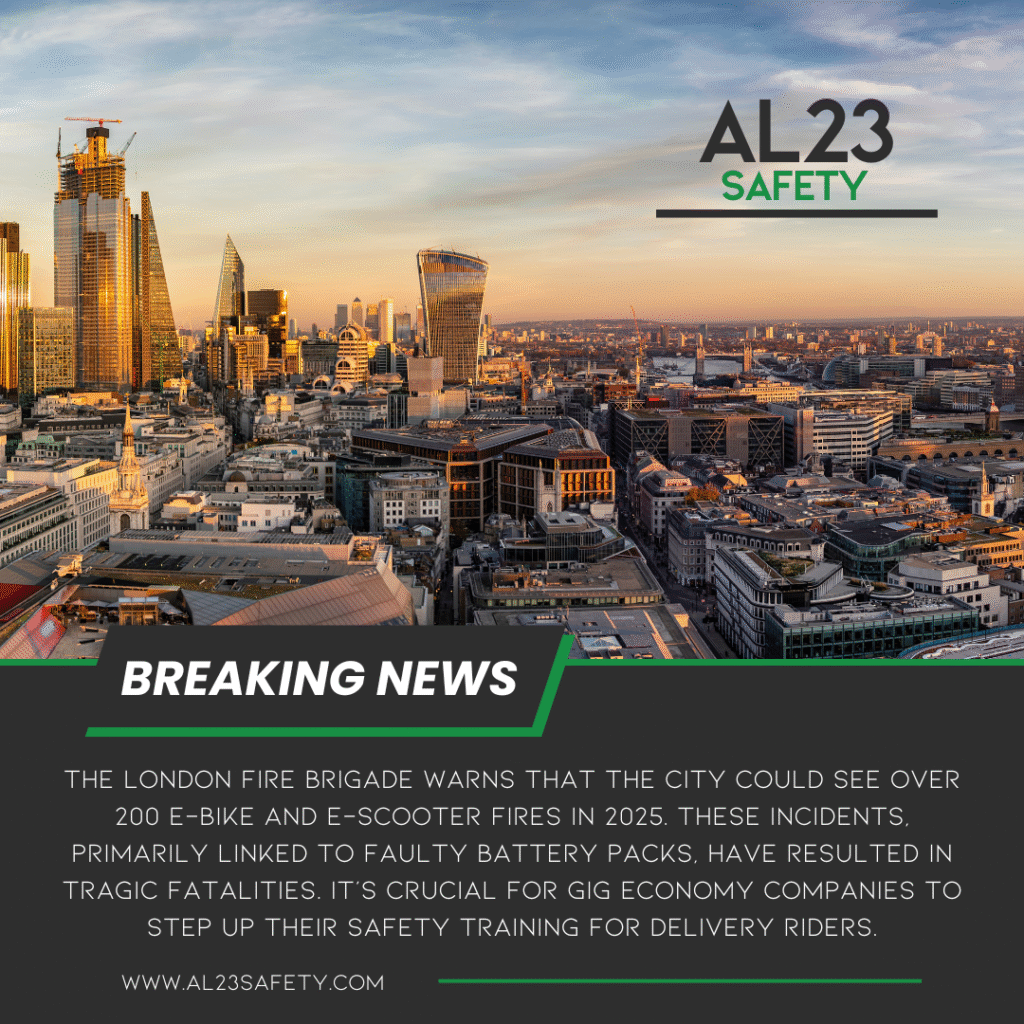
The alarming rise in e-bike and e-scooter fires highlights a pressing safety concern for both users and businesses. The London Fire Brigade (LFB) has reported that London could see over 200 such incidents in 2025, marking a worrying trend that can’t be overlooked. Many of these fires have been linked to faulty lithium-ion batteries, which, while increasingly popular, present real dangers when not properly managed. With tragic incidents resulting in fatalities and substantial property damage, the urgency for both individual users and businesses, particularly those in the gig economy, to understand and mitigate these risks cannot be overstated. The LFB’s statistics indicate we are currently facing a fire incident on average every other day, emphasising the critical nature of safety education and awareness. The responsibility falls particularly on gig economy companies like Uber Eats, Just Eat, and Deliveroo, who employ vast numbers of delivery riders relying on e-bikes for their livelihood. The LFB plans to address these companies to stress the importance of sharing crucial safety information with their workers. Fire safety management is not a mere statutory requirement but a moral responsibility. Businesses must devise comprehensive safety strategies that include thorough training on the use and charging of e-bikes. Adopting proactive measures can safeguard lives and property, thus ensuring the integrity of their operations and reputation. Additionally, the LFB calls for government intervention regarding the regulation of lithium-ion batteries and related products. As many incidents stem from unsafe charging practices and counterfeit goods purchased online, it is critical to establish stricter regulations that ensure batteries and chargers meet safety standards. As businesses invest in safety management systems and training programmes, it is vital to continuously assess risks associated with emerging technologies. Responsible procurement of e-bikes and adherence to safe charging practices can significantly reduce risk exposure. The push for stricter safety regulations aligns with the stance of Electrical Safety First, highlighting that there is an urgent need for robust quality control to mitigate the dangers posed by substandard battery products. Both certification and compliance play key roles in protecting the public. In conclusion, the projected rise in e-bike fires is a clarion call for comprehensive safety strategies and shared responsibility across the board. Whether through enhanced training, vigilance in product quality, or adopting the latest safety regulations, the appropriate steps must be taken now to foster a safer environment and prevent future tragedies. For any support with compliance and safety management systems, our team is ready to assist with tailored solutions for your business needs.

E-bike fires have become one of the most urgent fire-safety challenges facing British businesses in 2025. The London Fire Brigade (LFB) now warns that the capital could suffer more than 200 e-bike and e-scooter fires this year alone, that’s roughly one incident every other day. With lithium-ion battery failures identified as the primary cause, the […]

7 Essential Ways to Prevent Isocyanate Exposure in Motor Vehicle Repair
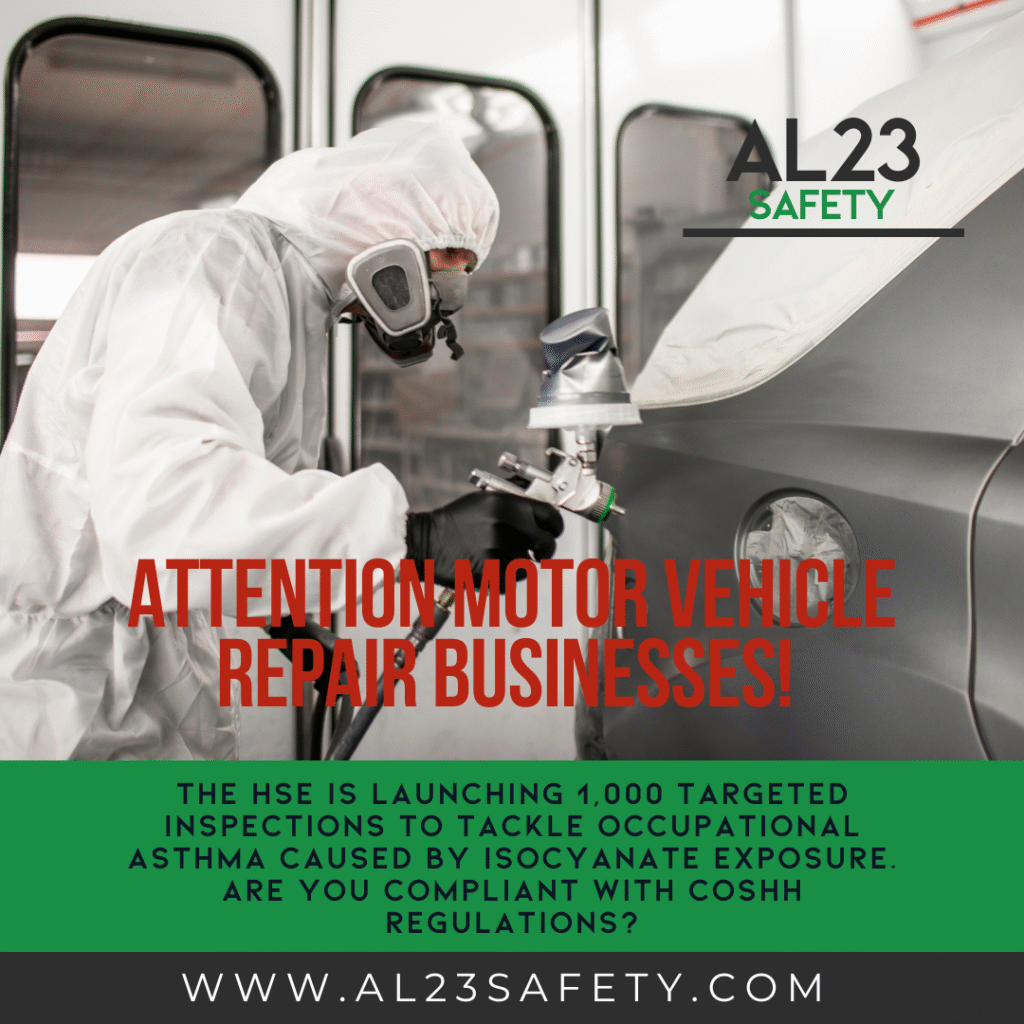
### The Importance of Compliance: HSE Launches Inspections for Motor Vehicle Repair Businesses The Health and Safety Executive (HSE) has initiated a campaign focusing on one of the hidden dangers faced by skilled workers in motor vehicle repair—occupational asthma caused by isocyanate exposure from paint sprays. With 1,000 inspections planned, it is imperative for businesses to understand the legal requirements and implement effective safety measures to protect their workforce. Occupational asthma is a serious health condition that can affect employees' quality of life and their ability to continue working in their chosen profession. Each year, countless skilled vehicle paint sprayers are forced to leave the industry due to this preventable condition. ### Understanding Isocyanates Isocyanates are widely used in two-pack (2K) paints, which are popular for their durability and finish. However, when sprayed, these substances can release an invisible mist that poses significant health risks. Once asthma develops, exposure—even at low levels—can trigger severe reactions, forcing workers to leave their jobs permanently. ### Compliance with COSHH Regulations Under the Control of Substances Hazardous to Health (COSHH) Regulations, employers have a legal duty to control exposure to harmful substances. This involves implementing comprehensive safety measures and ensuring regular health surveillance of employees exposed to isocyanates. Employers must monitor exposure levels, conduct health checks, and employ preventative measures to mitigate risks. ### Essential Safety Measures to Implement 1. **Proper Ventilation**: Ensure that your spray booths and rooms are tested for adequate extraction systems to prevent dangerous vapour buildup. 2. **Respiratory Protection**: Equip all employees involved in spray painting with air-fed breathing apparatus that meets the required safety standards. 3. **Clearance Procedures**: Establish and display measurable clearance times for workers to ensure safety after painting operations. It's crucial for businesses to comply with these regulations not just to fulfil legal obligations, but to safeguard the health and wellbeing of skilled workers. ### Consequences of Non-Compliance Businesses that neglect to meet health and safety regulations can face serious consequences, including improvement notices, prohibition notices, and severe fines. It's vital to prioritise the implementation of robust health and safety measures to avoid these risks. By ensuring compliance and making health surveillance a focus, businesses can create a safer working environment that minimizes the risk of occupational diseases. For comprehensive support in ensuring compliance with health and safety regulations, consider the consultancy services provided by professionals in the field. Designing a tailored approach to safety is essential for protecting your workforce while maintaining regulatory compliance. ### Conclusion In summary, the HSE's campaign is a reminder that diligent attention to occupational health is critical in the motor vehicle repair sector. Employers must take the necessary steps to protect their skilled workforce and create a safer workplace. By meeting COSHH standards and implementing effective safety measures, businesses can not only avoid legal implications but also foster a healthier and more productive work environment for all.

Isocyanate exposure in motor vehicle repair is a silent threat that can devastate skilled workers’ careers and health. The Health and Safety Executive (HSE) has launched a robust campaign, including 1,000 targeted inspections, to tackle this issue head-on. With occupational asthma forcing countless paint sprayers out of the industry each year, businesses must prioritise prevention […]

5 Shocking Reasons Fire Safety Compliance Saves Businesses from Disaster

**Title: The Critical Importance of Fire Safety Compliance for Businesses** In a concerning recent case, a company director from West Sussex found himself facing severe legal consequences for breaches of the Regulatory Reform (Fire Safety) Order 2005. Fined £6,200 after a fire safety inspection unveiled critical failings at his establishment, it's a stark reminder of the responsibilities that come with managing fire safety. The inspection revealed echoes of negligence: no proper fire alarm system, inadequate means of escape, and a severe lack of employee training in fire safety protocols. These lapses not only endangered the lives of employees but also demonstrated the potential repercussions businesses can face for non-compliance with fire safety legislation. West Sussex Fire and Rescue Service's Area Manager, Dave Bray, articulated the urgency of compliance, making clear that ensuring public safety is the highest priority. The service is committed to supporting businesses in effectively addressing fire safety compliance, yet they will pursue legal action diligently against any organisation failing to uphold these critical standards. Fire safety violations have profound implications for businesses, including financial penalties, increased insurance premiums, and, most importantly, the potential loss of life. The tragic consequences of fires in workplaces can resonate widely – from lost jobs to irreversible damage to businesses and reputations. This underscores the need for robust fire care strategies and proper compliance management systems. So, how can your business ensure compliance and mitigate risks? Consulting an expert in fire safety, such as AL23 Safety, is a crucial step. At AL23 Safety, we provide comprehensive fire risk assessments, tailor-made fire strategies, and ongoing support designed for your business's unique needs. Our seasoned consultants work diligently to identify potential hazards, ensuring that every aspect of fire safety is meticulously managed. We are dedicated to empowering businesses to not only fulfil their legal obligations but also cultivate a culture of safety within their organisations. Our services include: - **Fire Risk Assessments:** A thorough evaluation of your premises to identify hazards and recommend suitable control measures. - **Fire Strategy Development:** Crafting bespoke fire safety strategies to ensure compliance and enhance safety. - **Training and Education:** Providing and facilitating tailored fire safety training for all staff members. - **Ongoing Support:** Offering 24/7 guidance for all fire safety needs. Fire safety is not some optional consideration; it is a fundamental component of business operations. Investing in a robust fire safety strategy is investing in the future of your employees and your business. At AL23 Safety, we are here to partner with you in this endeavour. By fostering an environment of safety and compliance, we help safeguard businesses, employees, and communities. Together, we can build safer workplaces and ensure that incidents like what happened in West Sussex do not recur. Take the first step in assessing and improving your fire safety strategy today. Reach out for a consultation regarding our services and see how we can support your business in achieving the highest standard of fire safety compliance.

Fire safety compliance is no longer a mere checkbox for UK businesses, it’s a lifeline that prevents catastrophic losses. In today’s high-stakes regulatory environment, failing to adhere to fire safety standards can lead to devastating fines, legal battles, and even loss of life. A recent case in West Sussex highlights this urgency: a company director […]

5 Urgent Lessons from Hull Royal Infirmary Cladding Crisis on Fire Safety Compliance
The recent enforcement action regarding Hull Royal Infirmary’s cladding underlines a pressing issue in fire safety compliance for healthcare facilities across the UK. As fire safety regulations evolve, particularly after the Grenfell tragedy, the need for healthcare providers to stay updated is paramount. This article will explore the implications of these changes, the importance of compliance with the Building Safety Act 2022, and how professional fire safety consultancy can help. First and foremost, let's discuss the background of the situation at Hull Royal Infirmary. The cladding and insulation installed between 2013-2014 were compliant at the time but were found to be inadequate following the new legislation established after 2022. This shift in legislation compels all healthcare facilities to review their fire safety strategies and ensure that their buildings are equipped with materials that meet the current safety standards. At AL23 Safety, we understand that the stakes are higher in healthcare settings due to the vulnerability of patients and the critical nature of services provided. Our specialised fire risk assessment process delves into every aspect of your facility, identifying potential risks and advising on appropriate actions to mitigate those risks. Moreover, we provide comprehensive fire strategy development, custom-tailored to your facility's unique needs. By evaluating the building layout, occupancy, and activities, our consultants design preventative measures and safety protocols that comply with UK legislation. With over 600 fire wardens at Hull Royal Infirmary ensuring safety, we acknowledge how such proactive measures significantly enhance safety. However, reliance on existing personnel without extensive training could still leave gaps in emergency preparedness. Offering ongoing fire safety training is another pillar of our service, equipping staff with the knowledge needed to act swiftly and effectively in emergency situations. Undoubtedly, safety audits and inspections are part of maintaining compliance, but they are not ironclad solutions. At AL23 Safety, we believe in continuous improvement and offer 24/7 access to support, reinforcing the notion that safety is an ongoing process—not a one-time checklist. With our expertise, we ensure that risks are not only managed but systematically reduced, allowing for a focus on providing excellent patient care. As the situation at Hull Royal Infirmary illustrates, failing to meet fire safety regulations can lead to significant operational disruption and reputational damage. In summary, the evolving landscape of fire safety regulations necessitates that healthcare facilities like Hull Royal Infirmary remain vigilant and proactive in compliance efforts. At AL23 Safety, we are dedicated to helping organisations navigate these challenges, ensuring that they are equipped to meet current standards. By investing in a robust safety management system today, healthcare providers can safeguard their future and protect everyone involved.

Fire safety compliance remains a critical priority for healthcare providers across the UK, especially in light of recent enforcement actions. The Hull Royal Infirmary cladding issue serves as a stark reminder of how quickly standards can evolve, leaving even previously compliant buildings at risk. At AL23 Safety, we specialise in guiding facilities through these challenges, […]

7 Critical Reasons Your Employees Urgently Need Air-Purifying Respirators
Determining the Need for Air-Purifying Respirators: A Comprehensive Guide for Employers In today's dynamic work environments, the health and safety of workers is paramount. Many industries face the challenge of airborne contaminants that pose serious risks to employee safety. In this extensive guide, we explore how employers can assess the necessity of Air-Purifying Respirators (APRs) in their workplaces, outlining the standards, assessments, and implementation strategies needed to create a compliant and safe working environment. ### Understanding Air-Purifying Respirators Air-Purifying Respirators (APRs) are protective devices designed to filter harmful substances from the air, ensuring that workers breathe clean air. They are crucial in a variety of settings where airborne contaminants may be present, such as chemical processing, construction, and healthcare environments. ### Common Hazards Requiring APRs The hazards necessitating APR use range from chemical vapors to particulates and biological agents. Mainly, employers need to assess the specific hazards present in their work environment through comprehensive evaluations. ### Regulatory Framework In the UK, the use of APRs is governed by several regulations, including the Control of Substances Hazardous to Health Regulations (COSHH) and the Personal Protective Equipment Regulations. Understanding these legislative frameworks is essential for compliance and worker safety. ### Assessing the Need for APRs A rigorous hazard assessment is crucial for determining the need for APRs. This includes identifying airborne contaminants, assessing exposure levels, and evaluating existing control measures. Monitoring air quality and soliciting employee feedback provides critical insights into potential risks. ### Developing a Respiratory Protection Program Implementing a robust respiratory protection program involves not only selecting the right APRs but also ensuring proper training and fit testing for employees. Safety is not just about compliance; it reflects an organization’s commitment to its workforce. Investing in APRs is not only about adhering to legislation but about ensuring a safe working environment for your employees. ### Conclusion Creating a compliant and safe workplace demands thorough assessments and proactive measures. Understanding when your employees require Air-Purifying Respirators is an essential aspect of safeguarding their health. Through well-structured assessment, monitoring, and training programs, employers can protect their teams and foster a culture of safety. Explore our services for more insights on implementing effective safety measures in your organization today!

Air-purifying respirators are essential safeguards in many UK workplaces where invisible threats linger in the air. From chemical fumes in manufacturing plants to dust clouds on construction sites, these devices filter out harmful contaminants, allowing employees to breathe safely. But how do you know when your team truly needs air purifying respirators? This comprehensive guide, […]

Roofing Edge Protection: 5 Shocking Lessons from a Devastating Safety Breach

The construction industry can be a high-risk environment, and recent incidents serve as stark reminders of the importance of health and safety compliance. A sole trader, Gary Smith, operating as GJ Smith Roofing, has once again faced significant consequences for failing to provide essential safety measures on a roofing project. In December 2022, a worker fell approximately 10 feet from an unprotected roof edge while carrying large boards, resulting in serious injuries that included a fractured vertebra and a broken ankle. An investigation by the Health and Safety Executive (HSE) revealed that the work was not adequately planned or risk assessed, with no edge protection in place despite its practicality. Subsequently, edge protection was only put up after HSE intervention. Tragically, this incident marks the second offence for Smith regarding similar safety violations. HSE inspector Tim Nicholson expressed frustration over the avoidability of the incident, stating, “This latest offence resulted in a man being seriously injured. What makes this incident even more frustrating is the fact it could so easily have been avoided by properly planning the task and ensuring that suitable edge protection had been put in place prior to work starting.” These comments highlight a critical lesson in workplace safety—the necessity of compliance with regulations to create safe environments for employees. Smith faced charges under regulation 4(1) of the Work at Height Regulations, ultimately leading to a fine of £2,125 and additional costs of £5,445. This case exemplifies not just the financial implications of neglecting safety protocols, but also the human cost that can result from such oversights. Employers in the construction sector must take this incident as a warning. Proper planning, risk assessments, and adherence to health and safety regulations are non-negotiable aspects of operations. By employing structured safety management systems, businesses can not only avoid legal repercussions but, more importantly, safeguard the well-being of their employees. In conclusion, prioritising safety in the workplace is a shared responsibility that requires compliance, foresight, and dedication. Let us commit to fostering a culture of safety that protects everyone involved in our projects. To learn more about how you can implement tailored safety solutions in your business, visit our services.

In the high-stakes world of construction, roofing edge protection stands as a critical safeguard against life-altering accidents. A recent safety breach involving sole trader Gary Smith of GJ Smith Roofing underscores the dire consequences of neglecting this essential measure. In December 2022, a worker plummeted approximately 10 feet from an unprotected roof edge while handling […]

First Aid Training in the Workplace: Why It’s Essential for Every UK Business

Is your workplace prepared for emergencies? A recent study conducted by St John Ambulance highlights grave concerns surrounding first aid training in the UK workforce. With nearly one-third of employees citing experiences where no first aider was present and a staggering 22% having never received any first aid training, the facts are clear: there are significant gaps in preparedness that need addressing. The Importance of First Aid Training in Workplaces First aid training is not just a box-ticking exercise but a fundamental aspect of creating a safe working environment. The insights from St John Ambulance underline the urgent need to equip employees with essential skills to respond effectively during emergencies. Notably, despite proactive measures in many companies, the absence of trained staff can lead to detrimental consequences, both legally and morally. Legislative Requirements In the UK, the Health and Safety (First-Aid) Regulations 1981 mandate that employers must provide adequate and appropriate equipment, facilities, and personnel to ensure their employees receive immediate attention if they are injured or taken ill at work. This legislation necessitates that employers conduct assessments to determine their specific needs based on their unique risks and environments. Challenges in First Aid Training While the desire to help is present, with 79% of employees expressing care for their colleagues' wellbeing, the findings indicate a concerning disconnect between intent and preparation. Approximately 22% of employees last trained more than five years ago, leading to significant skill fade. Diving deeper into the statistics, the impact of workplace culture emerges. Many employees find themselves spending significant time in activities like preparing drinks for others, yet a fraction of that time could equip them with life-saving skills through an accredited first aid course. This misplaced prioritisation begs the question: Why are we not investing in our colleagues’ capacity to save lives? The Way Forward To address these gaps, organisations must undertake a comprehensive review of their first aid provisions. St John Ambulance recommends that businesses ensure multiple staff members are trained, refreshers are scheduled regularly, and first aid training is embedded into the workplace culture. This proactive approach is essential not just for legal compliance, but for fostering an environment where safety takes precedence. Conclusion Investing in first aid training is not merely a compliance measure — it is an investment in the wellbeing of your workforce. By moving past reactive strategies and embedding safety into the company culture, businesses can cultivate a resilient and responsive environment. Employers need to take the lead in ensuring that their teams are prepared for the unexpected. For expert guidance on establishing effective first aid training in your workplace, visit our services.

First aid training in the workplace is no longer optional. It’s a critical lifeline that can mean the difference between life and death. In today’s fast-paced work environments, emergencies strike without warning, from minor cuts to sudden cardiac arrests. Yet, a shocking study by St John Ambulance reveals that nearly one-third of UK employees have […]

Workplace Safety Culture: 5 Critical Lessons from a £100,000 Burns Fine in the Chemical Industry
**Understanding the Impact of Workplace Safety Culture: A Case Study of Serious Burns in the Chemical Industry** In the industrial sector, safety should never be an afterthought. Unfortunately, the recent incident involving Dundas Chemical Company—a Scottish chemicals firm fined £100,000 after a young worker was left severely burned—sheds light on critical failings in workplace safety protocols. This incident could have been entirely preventable and highlights the importance of enforcing a strong safety culture. ### The Incident: A Preventable Tragedy In October 2019, a 23-year-old employee was cleaning a process water tank when he encountered an uninsulated steam hose. The hose released steam due to a lack of proper control mechanisms—an alarmingly dangerous oversight that put the worker's life at risk. As he attempted to protect himself from the scalding steam, he suffered burns over a significant portion of his body, leading to permanent scars and a painful recovery journey. ### Investigation Findings An investigation by the Health and Safety Executive (HSE) revealed several systemic failures at Dundas Chemical Company: - **Unsafe Equipment**: The steam hose was marked by a faulty nozzle that lacked a trigger and a flow control mechanism. - **Maintenance Failures**: Supervisors were aware of the defective steam mixing valve but took no action to remedy the situation. - **Insufficient Training**: Workers received inadequate training about the risks involved in using high-pressure equipment and emergency procedures to follow in case of an accident. ### Lessons for Real-World Application This case serves as a vital lesson for all OSH practitioners. Here are key takeaways that businesses should implement: 1. **Creating Safe Systems of Work**: Rigorous risk assessments must be undertaken before engaging in high-hazard tasks. Businesses have a duty to ensure that all equipment is designed with suitable safety features and operated under safe systems. 2. **Emphasizing Equipment Maintenance**: All equipment must be regularly inspected and maintained. Keeping detailed records will not only help ensure that all machinery functions optimally but will also demonstrate compliance with legal obligations. 3. **Comprehensive Training Programs**: Staff training should be an ongoing process, incorporating refresher courses that equip workers with knowledge about equipment usage, risk awareness, and emergency protocols. 4. **Fostering a Culture of Safety**: Companies should cultivate an environment where safety concerns can be freely communicated without fear of reprisal. When workers feel empowered to voice their concerns, it leads to proactive solutions and overall safer workplaces. 5. **Emergency Preparedness**: Employers must ensure that emergency showers and other safety gear are accessible, functional, and well-maintained, as immediate response can mitigate the effects of accidents. ### The Key Takeaway The incident at Dundas Chemical Company is a stark reminder of the consequences when safety is not prioritised. By deeply integrating health and safety management practices into every aspect of operations, employers can protect their workforce and avoid severe penalties. AL23 Safety offers expert consultancy to help you develop and implement effective health and safety solutions. If you're looking to bolster your workplace safety protocols, reach out today to discover how we can support you in creating a safer working environment.

Workplace safety culture is the backbone of any high-hazard operation. When it falters, the consequences can be life-changing. A Scottish chemical firm, Dundas Chemical Company, was fined £100,000 after a 23-year-old worker suffered severe burns while cleaning a process water tank. This preventable incident underscores how fragile workplace culture becomes without rigorous systems, training, and […]

Introduction: The Devastating Cost of Ignoring Health and Safety Compliance
The recent tragic incident at a construction site in Bath starkly highlights the critical need for stringent health and safety systems in the construction industry. H. Mealing & Sons Limited is now facing substantial fines after the loss of employee Gary Anstey, age 57, due to the collapse of a retaining wall that was not properly planned or supervised. The Health and Safety Executive (HSE) conducted an investigation revealing that the company failed to comply with well-established guidelines governing temporary structures. These guidelines dictate that any temporary structure must be thoroughly designed and installed to withstand loads placed against them. This lack of oversight illustrates the urgent need for construction firms to prioritise compliance with health and safety legislation. What does this incident mean for your business? It’s time to reflect on the importance of having robust safety measures in place. Effective health and safety management encompasses comprehensive risk assessments, adequate training of staff, and strict adherence to safety regulations. Investing in a strong safety culture not only protects employees but also shields your business against potential fines, liabilities, and reputational damage. At AL23 Safety, we provide tailored health and safety consultancy services across various sectors. Our consultants focus on working closely with your business to understand your specific risks and requirements, ensuring that you are well-equipped to handle workplace safety challenges. Our services include comprehensive risk assessments, fire safety strategies, compliance support, and continuous training. By prioritising health and safety, companies can create safer, more productive work environments while ensuring compliance with UK legislation. The incident at H. Mealing & Sons Limited serves as a tragic reminder that no business is immune to safety risks; proactive measures are essential in preventing such disastrous outcomes. For more information about how we can help your business stay compliant and protected, be sure to explore our services. #HealthAndSafety #Construction #AL23Safety #RiskManagement #FireSafety

Health and safety compliance is not just a regulatory box to tick. It is the cornerstone of a thriving, responsible business in the UK. The recent tragedy at a construction site in Bath serves as a harrowing wake-up call for industries nationwide. On a fateful day, 57-year-old Gary Anstey lost his life when an inadequately […]